
Weekly market commentary
Insights
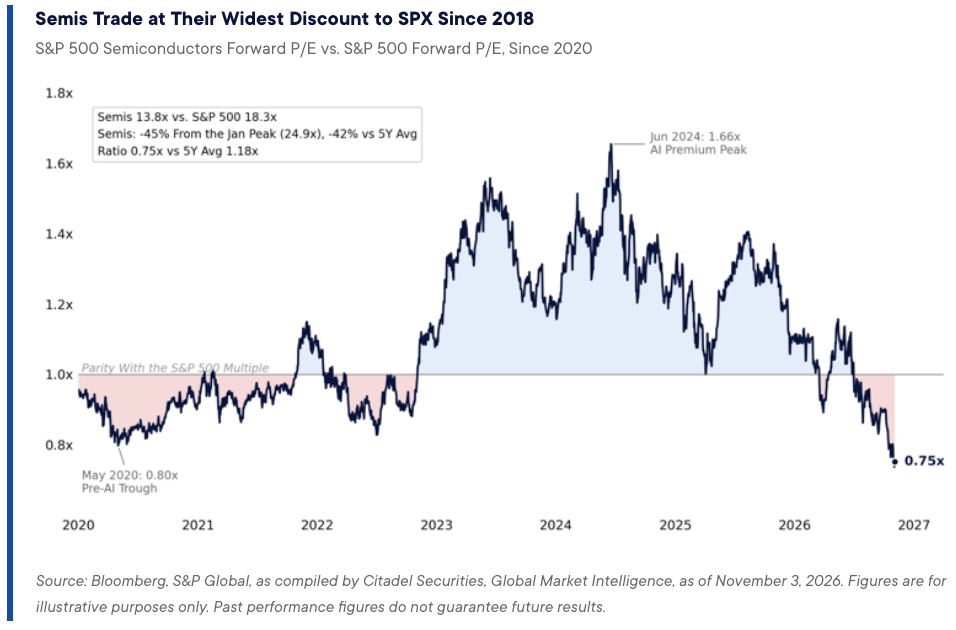
SMH catapult: ~23% if chips are flat in a year, 1.5x any gain at year three if not
Chip stocks trade at their widest discount to the S&P 500 since 2018 (Citadel) and SMH is 27% off its high. The note pays ~23% if SMH is flat or higher in a year, or 150% of any gain at year three.
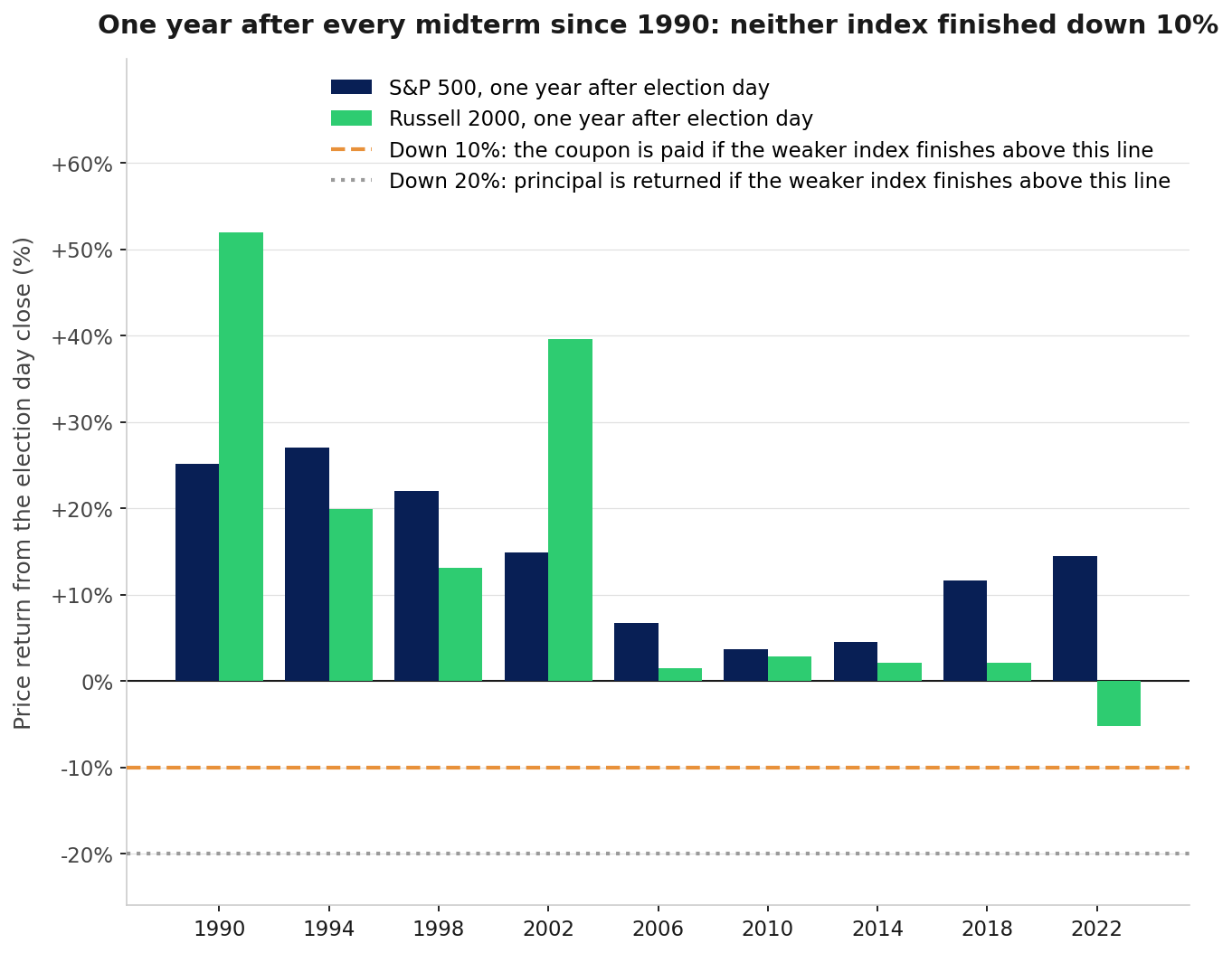
The winning streak nobody's talking about
Nine midterms since 1990 and the weaker of the S&P 500 and Russell 2000 never finished the next year down 10%.
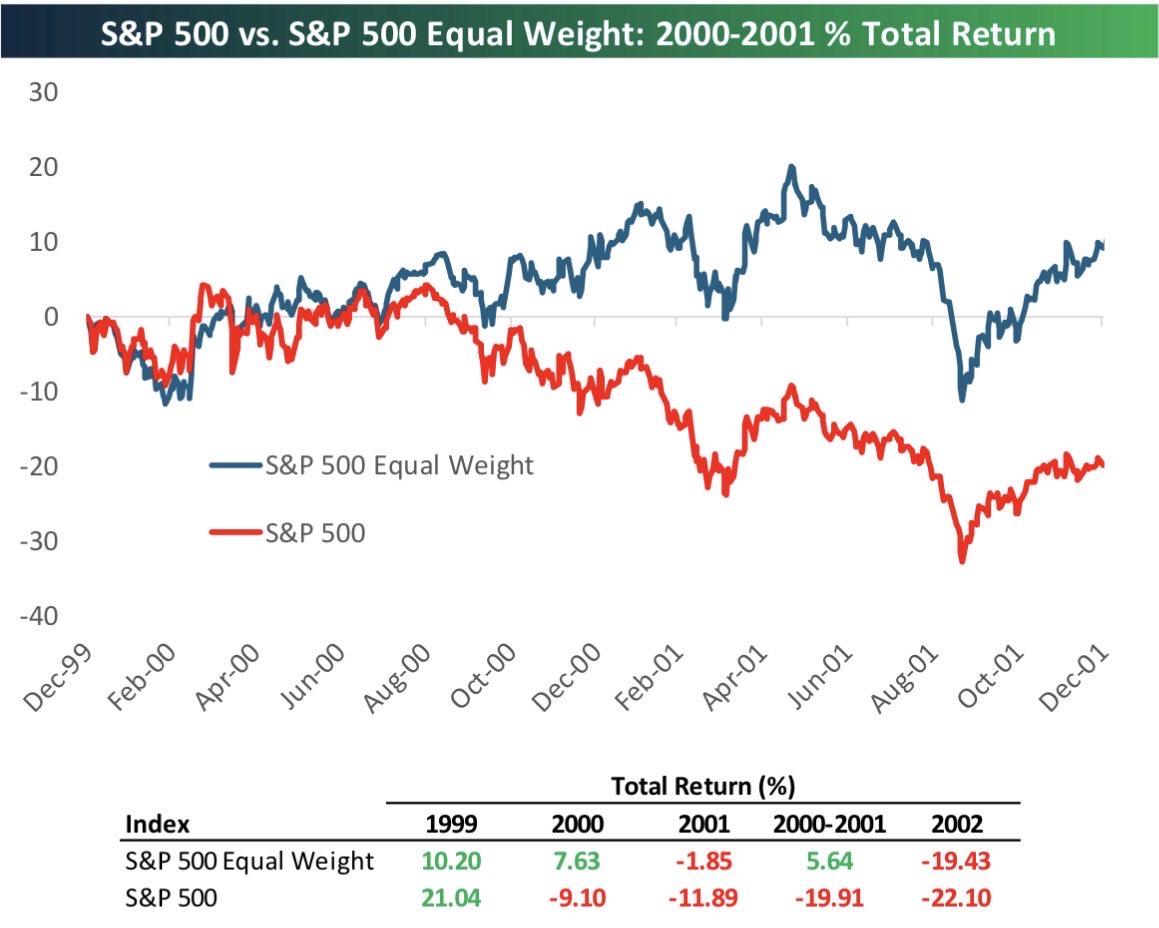
RSP growth note: if this is 2000 again, the average stock won last time
Everyone compares today to 2000. Over 2000 and 2001 the S&P 500 lost 19.9% and equal weight gained 5.6% (Bespoke). The note pays ~120% of any RSP gain over five years with a 70% barrier.
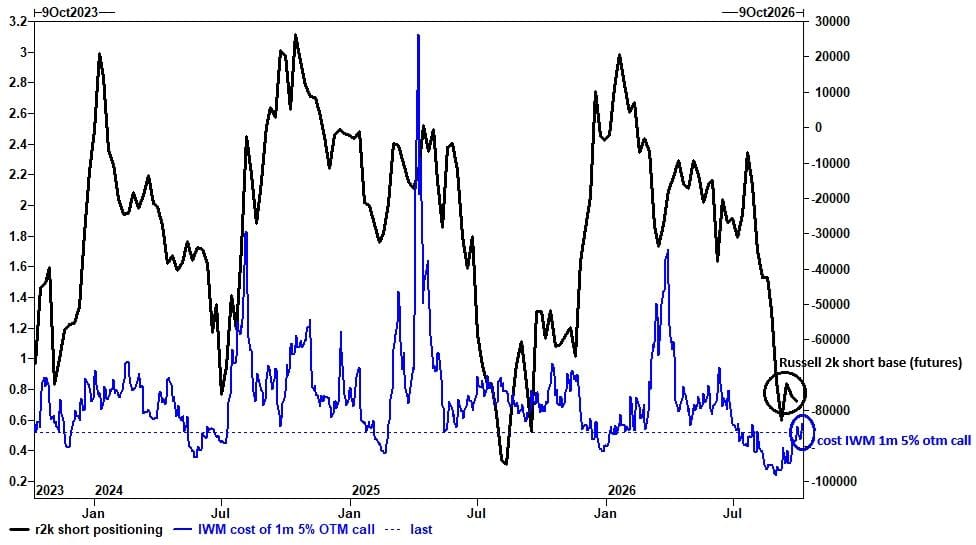
IWM catapult: ~13% if small caps just hold, 1.5x the gain if they run
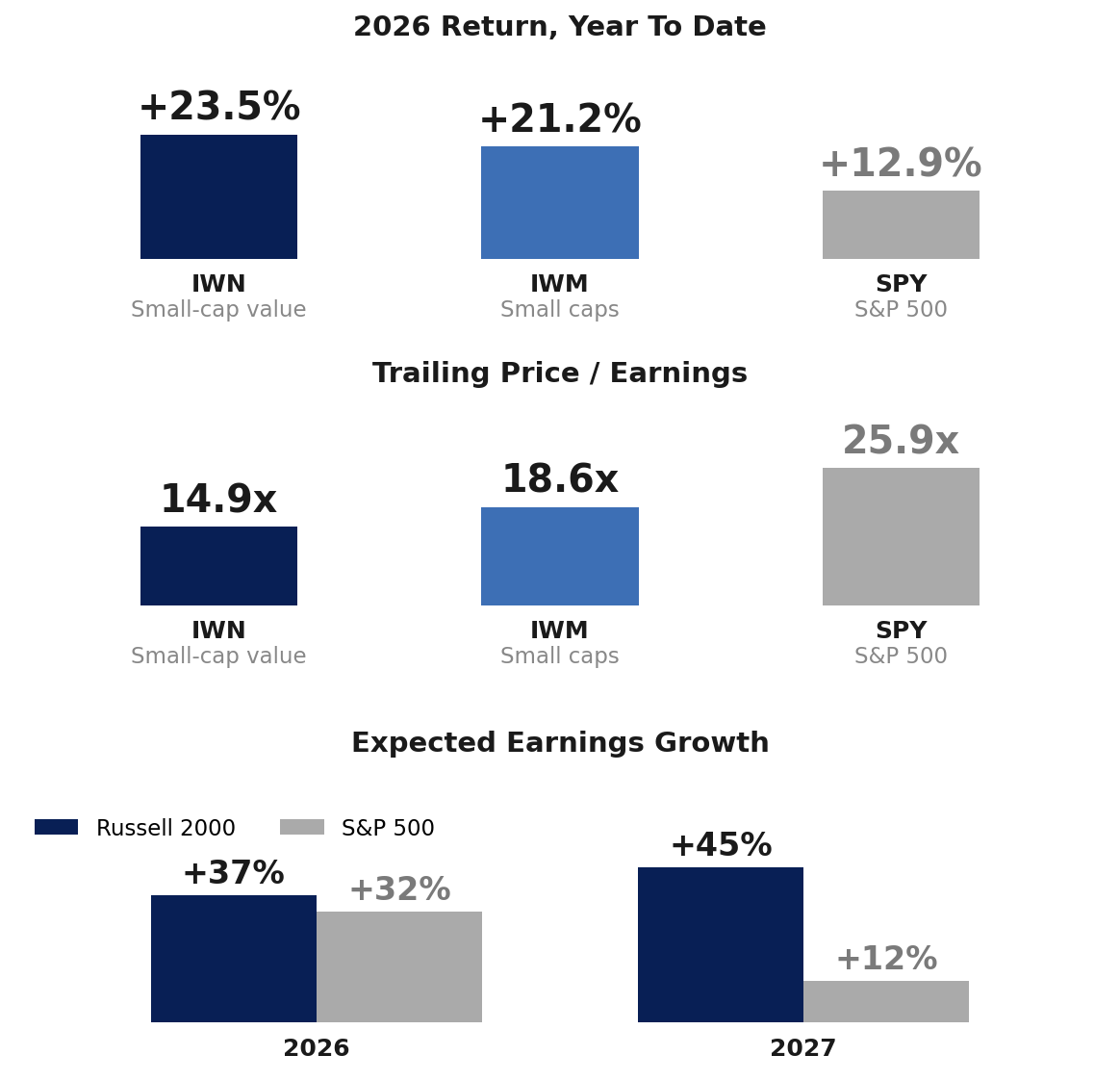
The crowd is the most short small caps in three years and calls are near their cheapest, so a desk pays ~13% just for IWM to hold flat, with 1.5x the upside if the squeeze comes.

XLC growth note: the same AI names as XLK, down on the year
XLC holds Alphabet, Meta and Netflix, the same AI names driving XLK, yet it is down while XLK is up 37%. A growth note buys the laggard with the same engine.
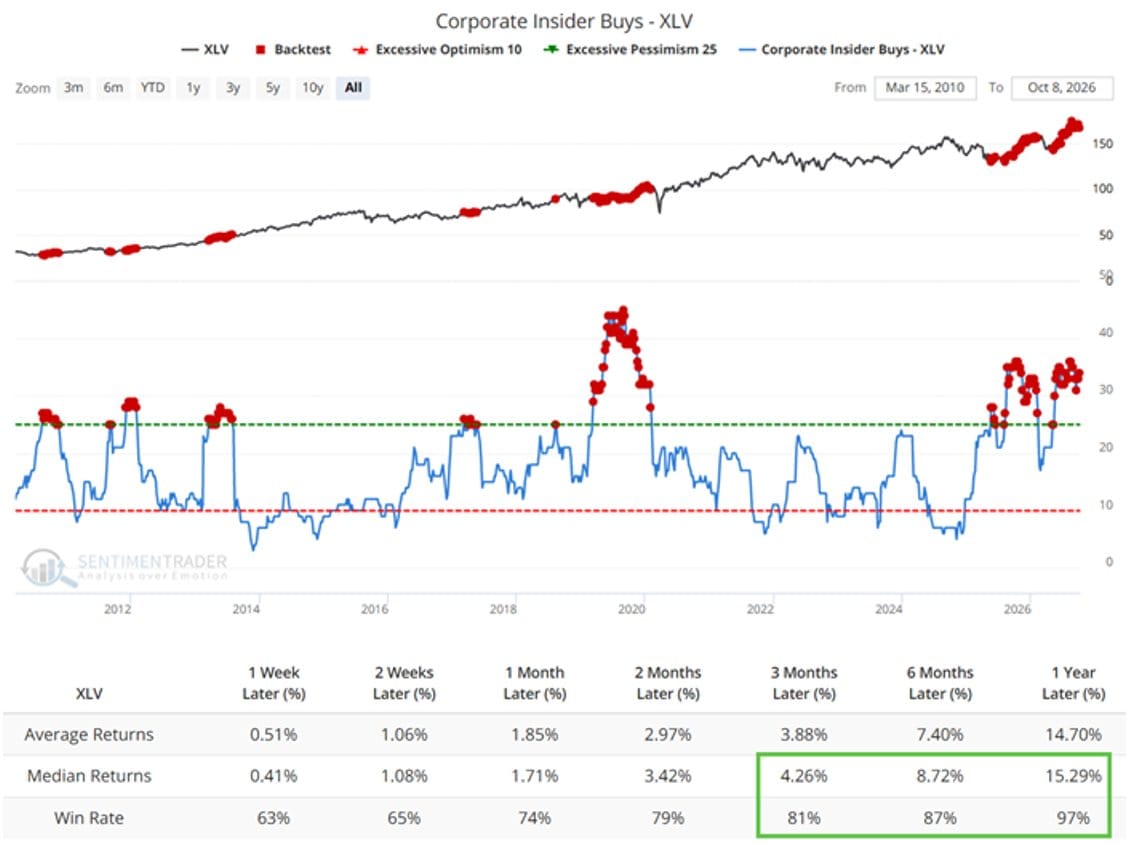
XLV barrier note: insiders are buying health care, ~108% of the upside
Health care executives are buying their own stock while the sector lags; a year after past waves XLV was higher 97% of the time. The note pays ~108% of any catch-up.
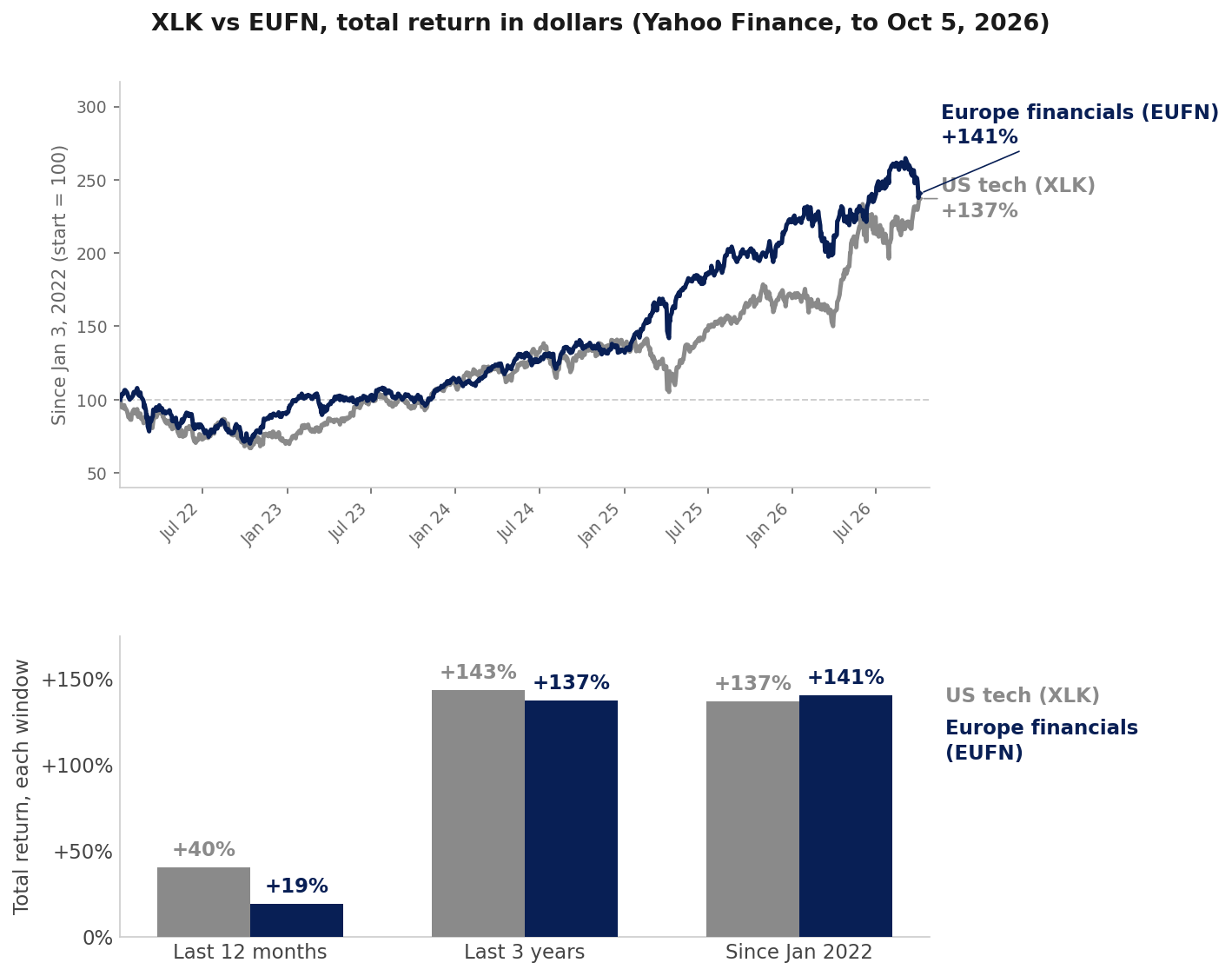
EUFN growth note: European banks have beaten XLK since 2022
Everyone is crowded into AI, yet European banks have quietly beaten XLK since 2022 at a fraction of the multiple. The note owns that trend at ~130%.
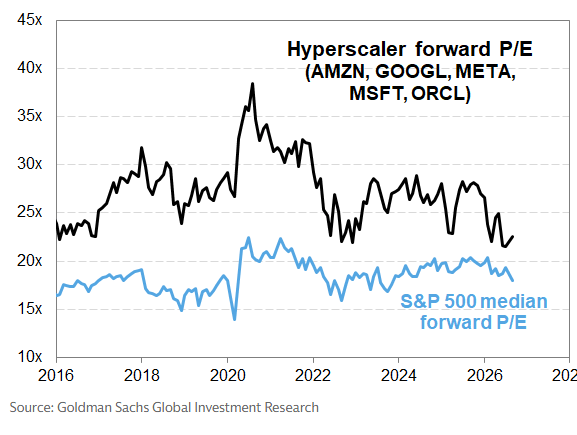
Protection booster: Amazon, Microsoft, Alphabet at 2.6x, an early rally removes the barrier
Mega-cap tech after a run: 2.6x the upside, and if the three rally 20% early the barrier disappears. The rally itself buys the protection.
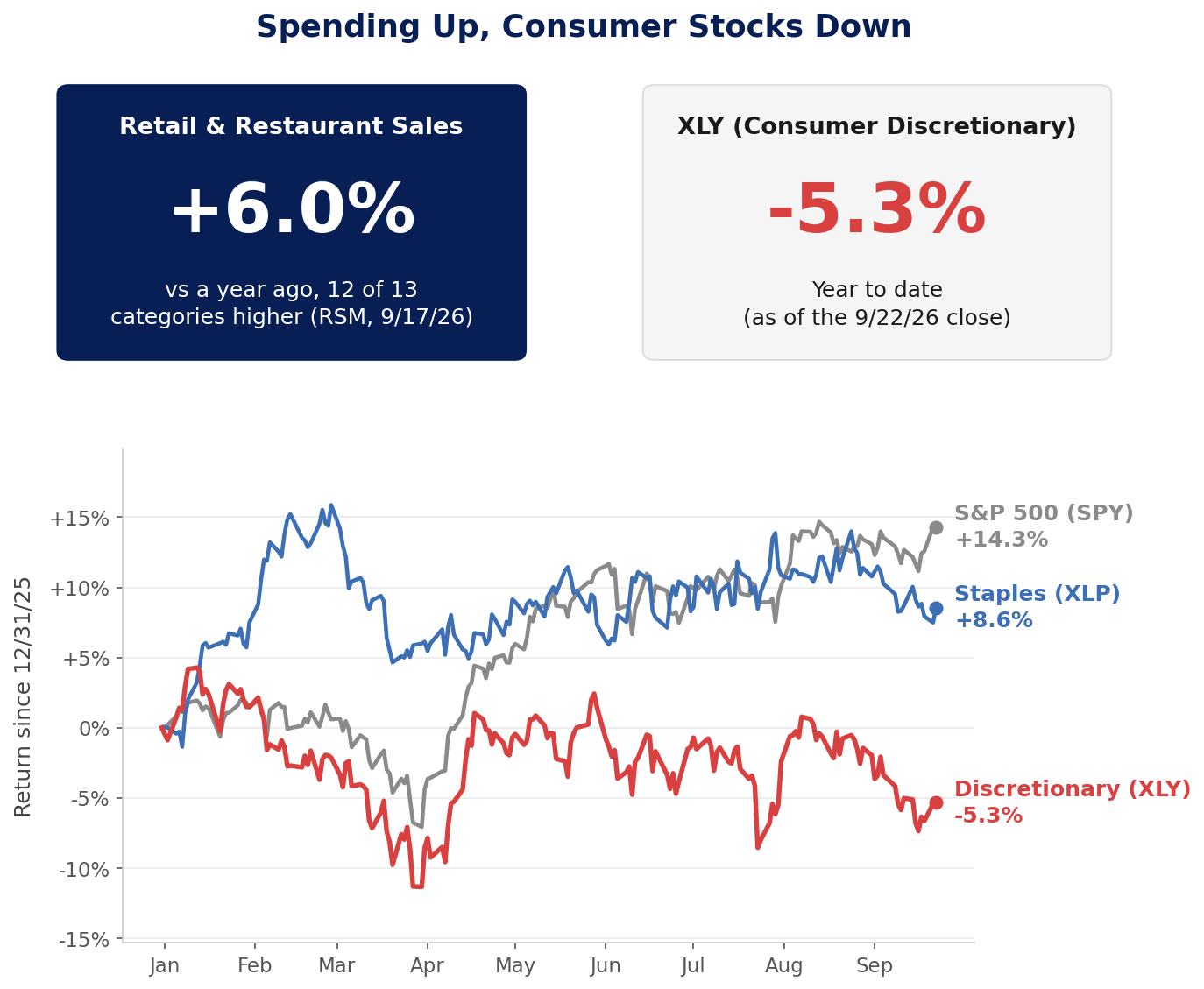
XLY/XLP growth note: spending is up 6%, consumer stocks are down 5%
Americans are spending 6% more and the stocks that sell to them are down 5%. The note takes the gap: 220% of a recovery with a barrier underneath.
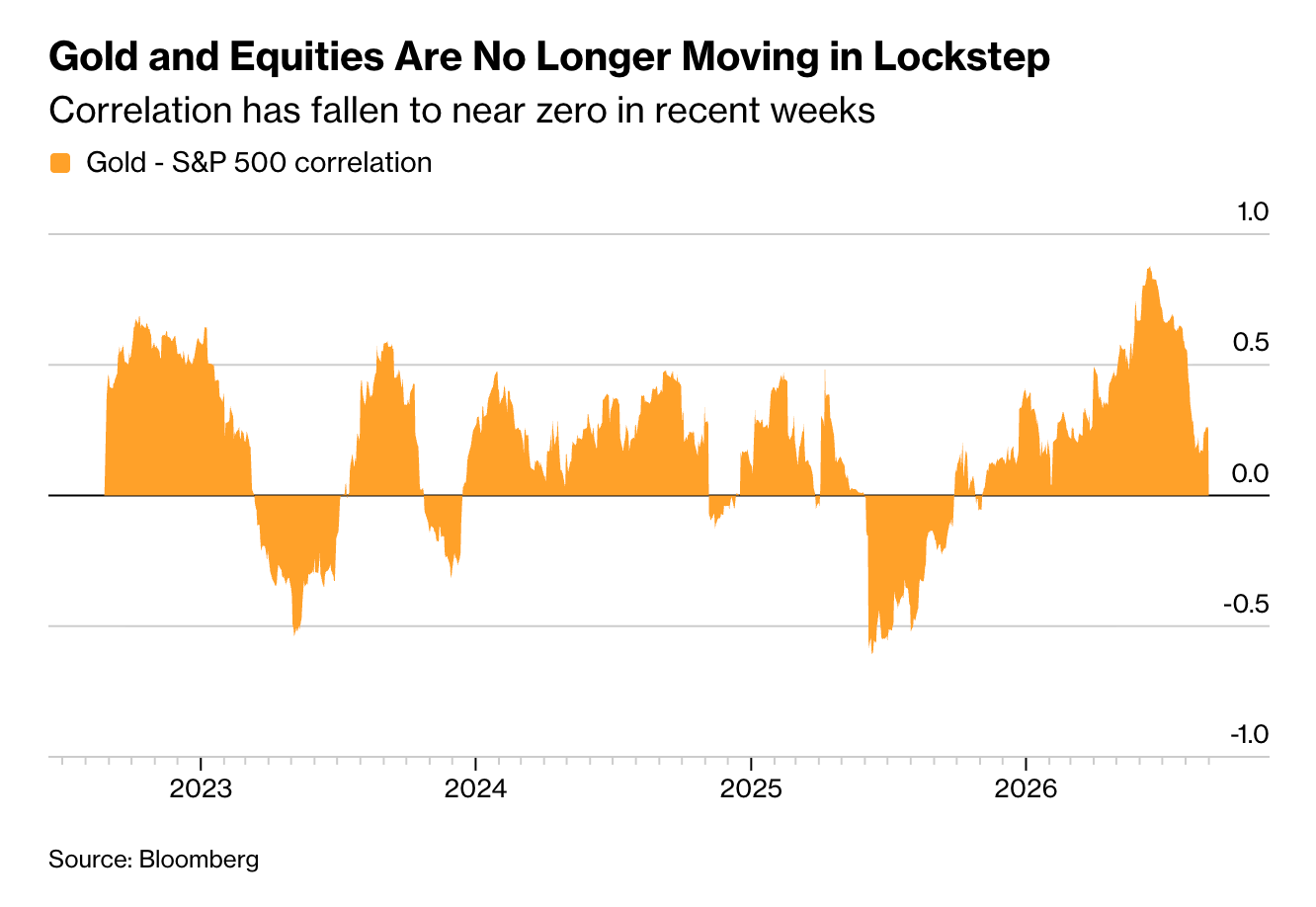
GLD/GDX buffered note: gold has stopped moving with stocks
Gold has stopped moving with the stock market, which makes it a hedge again. The note owns gold and the miners with the first part of any drop absorbed.
spx tail risk
copper
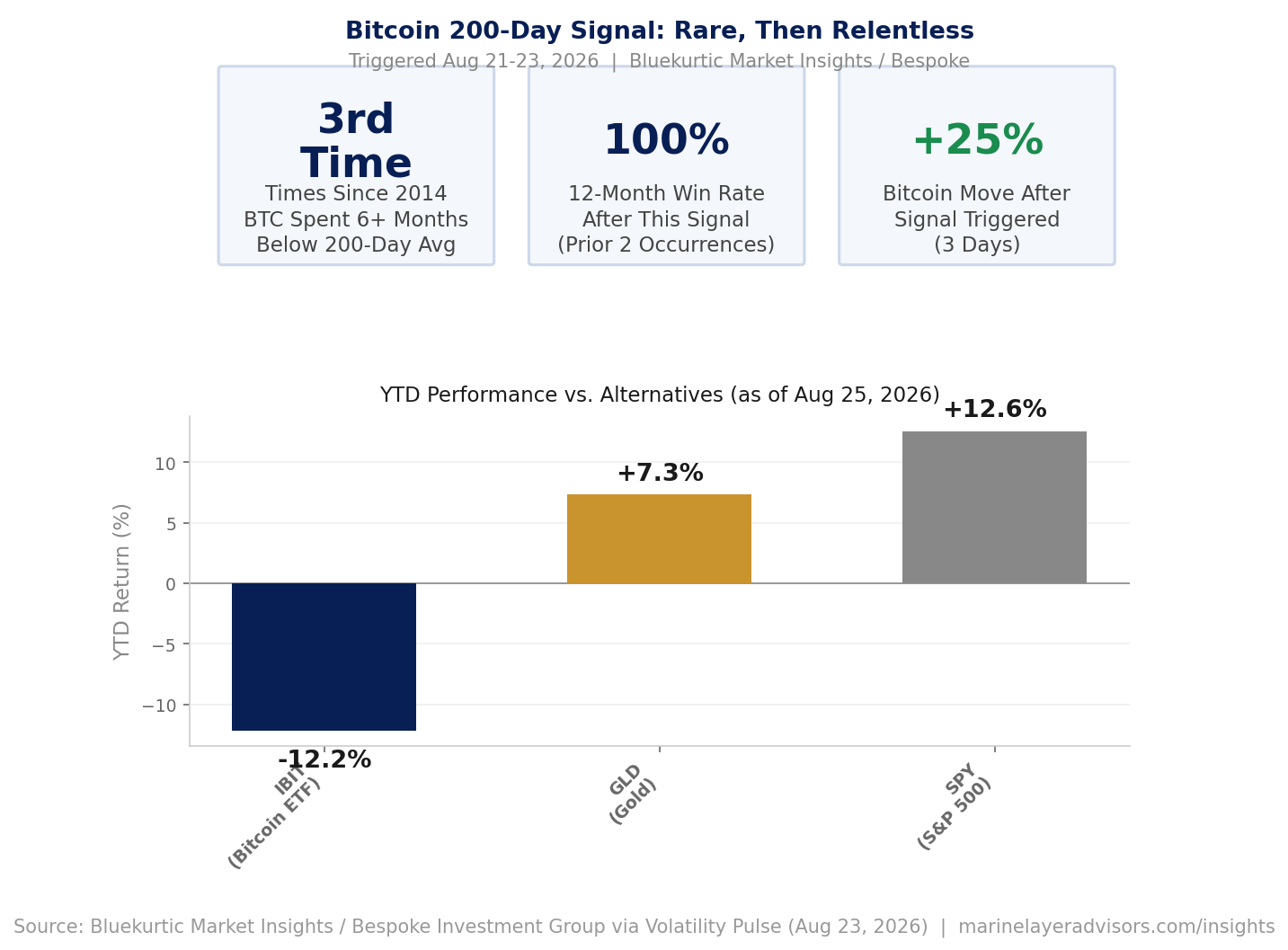
IBIT growth note: bitcoin at 200% with a 70% barrier, next to gold
Gold is up 38% and bitcoin is 37% off its high: two assets people buy when they distrust currencies, at different points in the cycle. The note pays 200% on bitcoin.
iwm smallcap
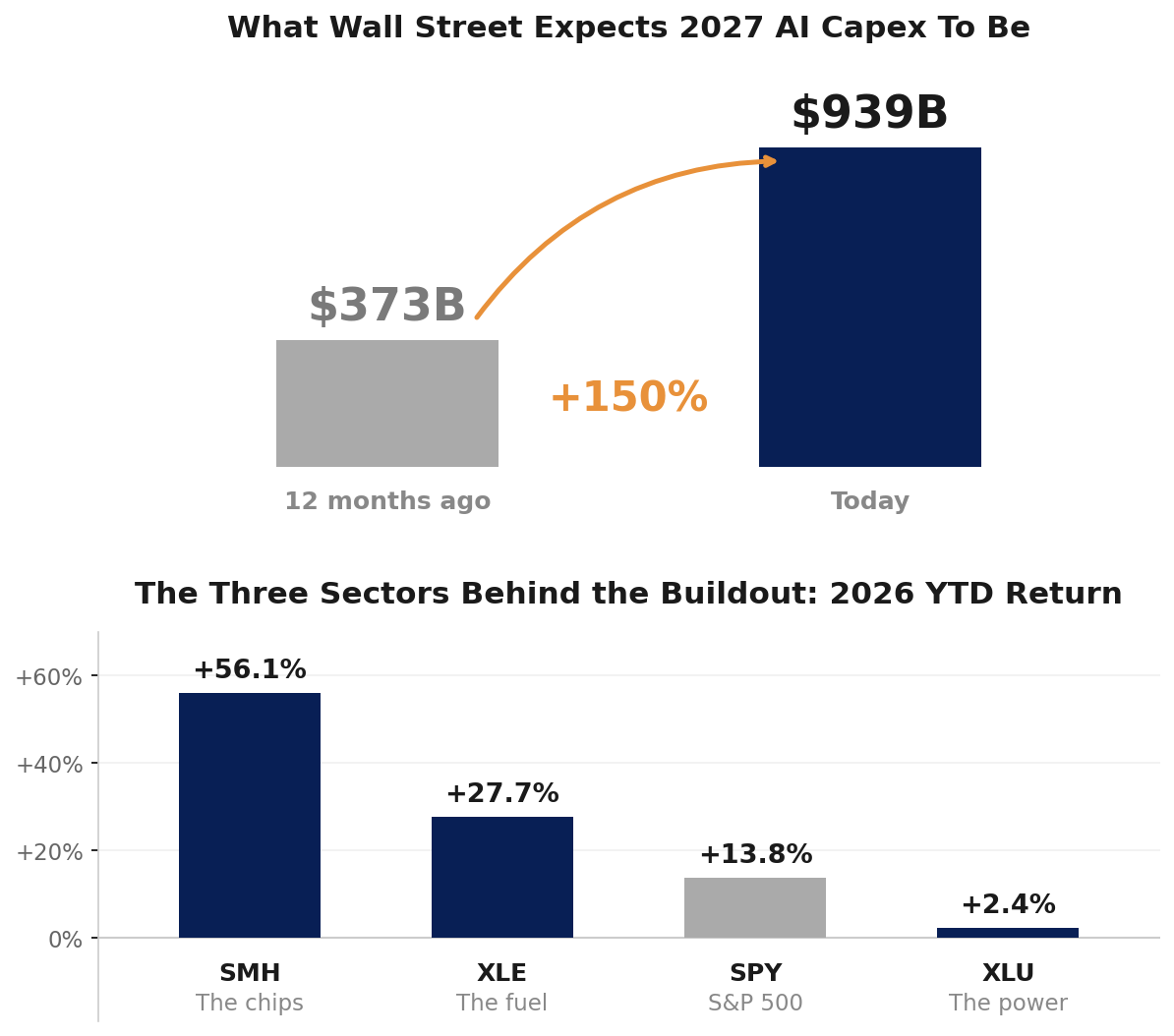
SMH/XLE/XLU catapult: AI spending now tops homebuilding, three ways to get paid
America now spends more building AI than homes, and that spending runs through chips, power and energy. One note pays a 33% call, 300% participation or a 50% barrier.
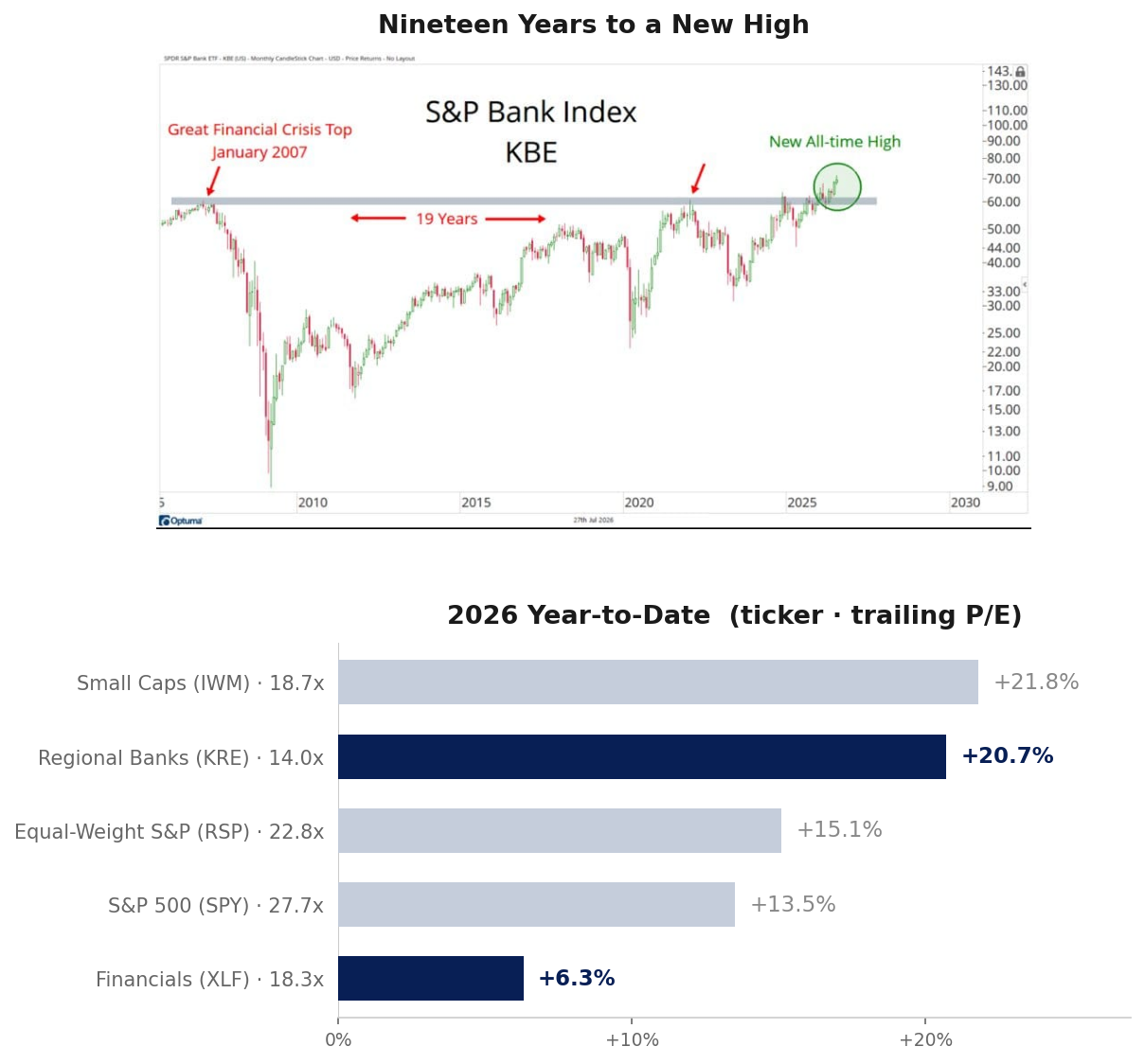
XLF/KRE growth note: banks' first all-time high in 19 years, at 190%
Banks made their first all-time high in 19 years while still trading below the market multiple. Breakouts after long bases tend to run; the note pays 190% of it.
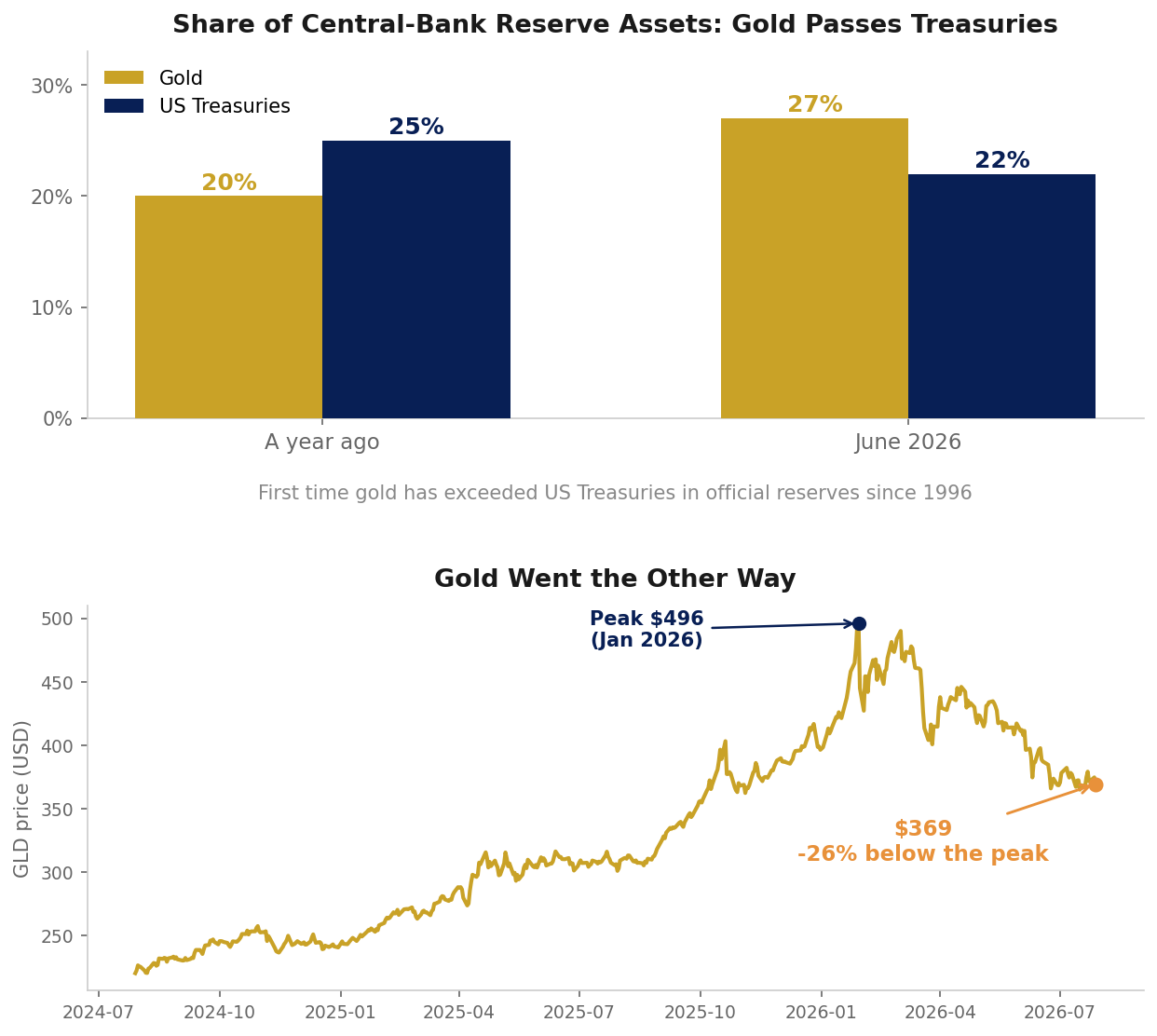
GLD/GDX income or growth: central banks now hold more gold than Treasuries
Central banks hold more gold than Treasuries for the first time since 1996 and keep buying. Income or buffered growth on gold and the miners.
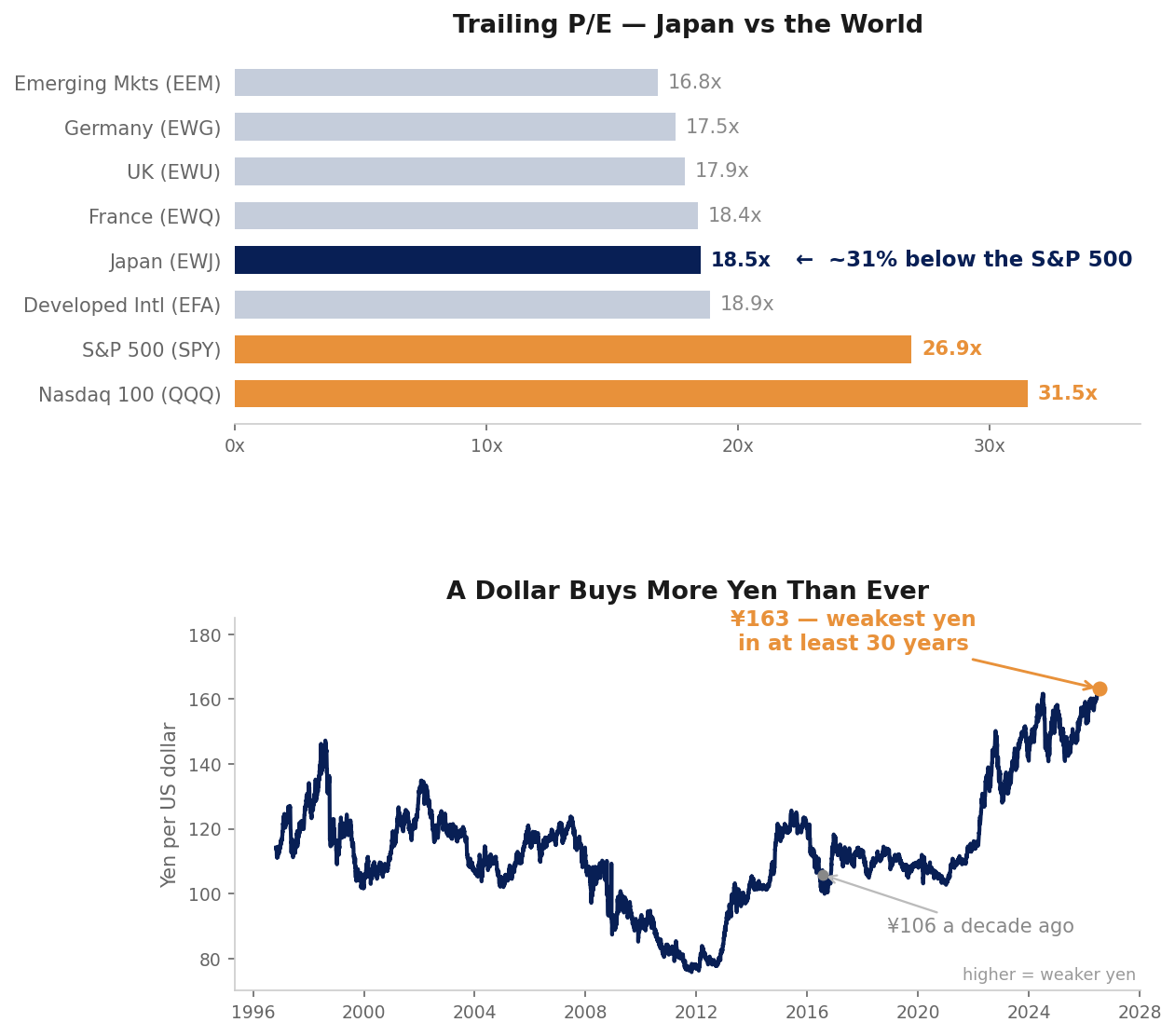
EWJ growth note: Japan at a 31% discount, in a yen at 30-year lows
Japan trades 31% below the S&P 500 in a currency at 30-year lows, so a buyer gets a discount on the stocks and the yen. A 5-year growth note on EWJ.
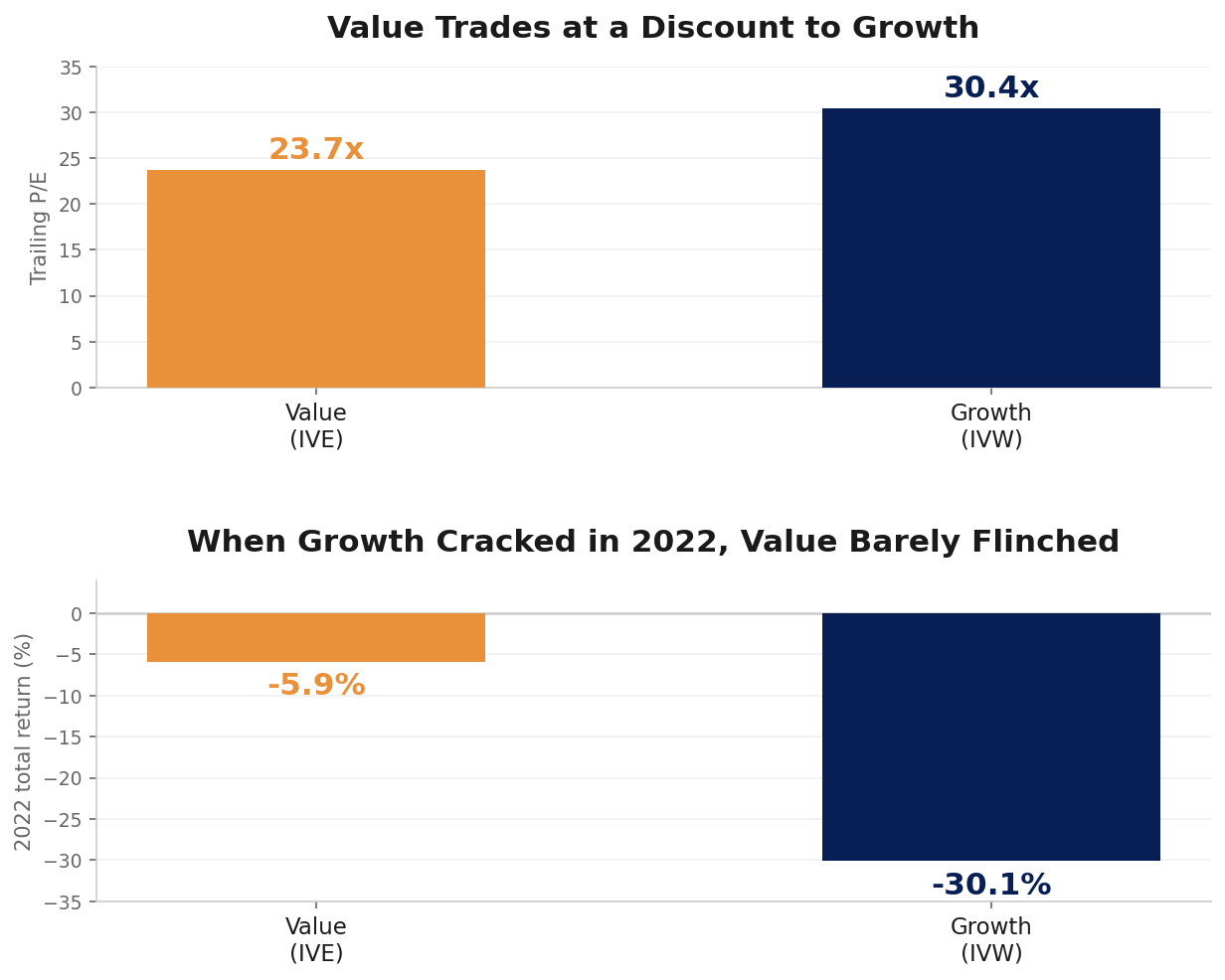
IVE buffered note: own value before its turn, with a cushion
Value has lagged growth for years; when the turn comes it comes fast. The note owns value at a discount with a cushion so clients are already there.
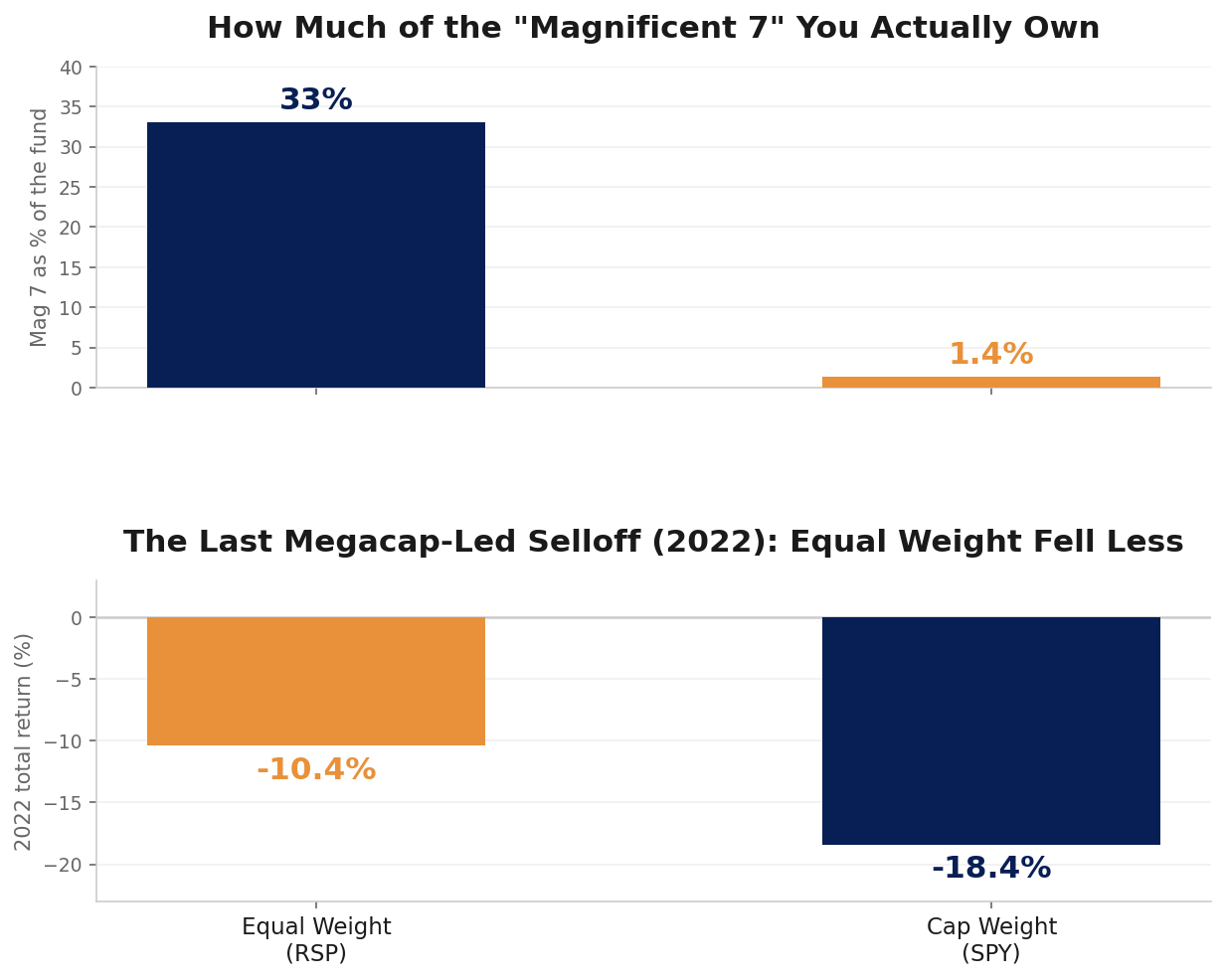
RSP growth note: long the S&P 500 without the AI concentration
Seven stocks carry the S&P. Equal weight keeps a client fully long the market without the AI concentration, and the note adds a defined downside.
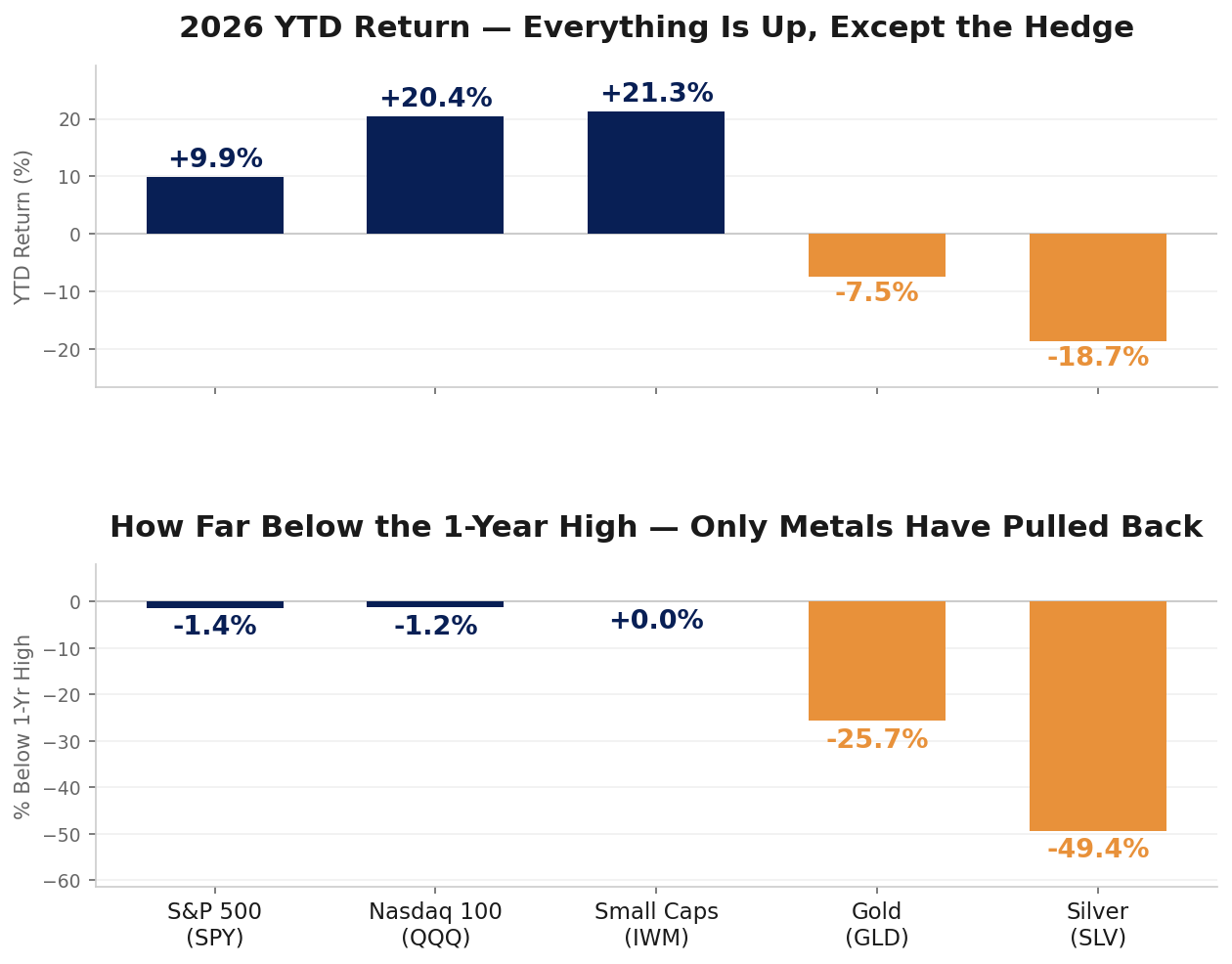
GLD/SLV buffered note: gold and silver after the pullback, first 20% absorbed
Gold and silver just sold off hard, which is when protection on them costs least. The note absorbs the first 20% of any further drop.
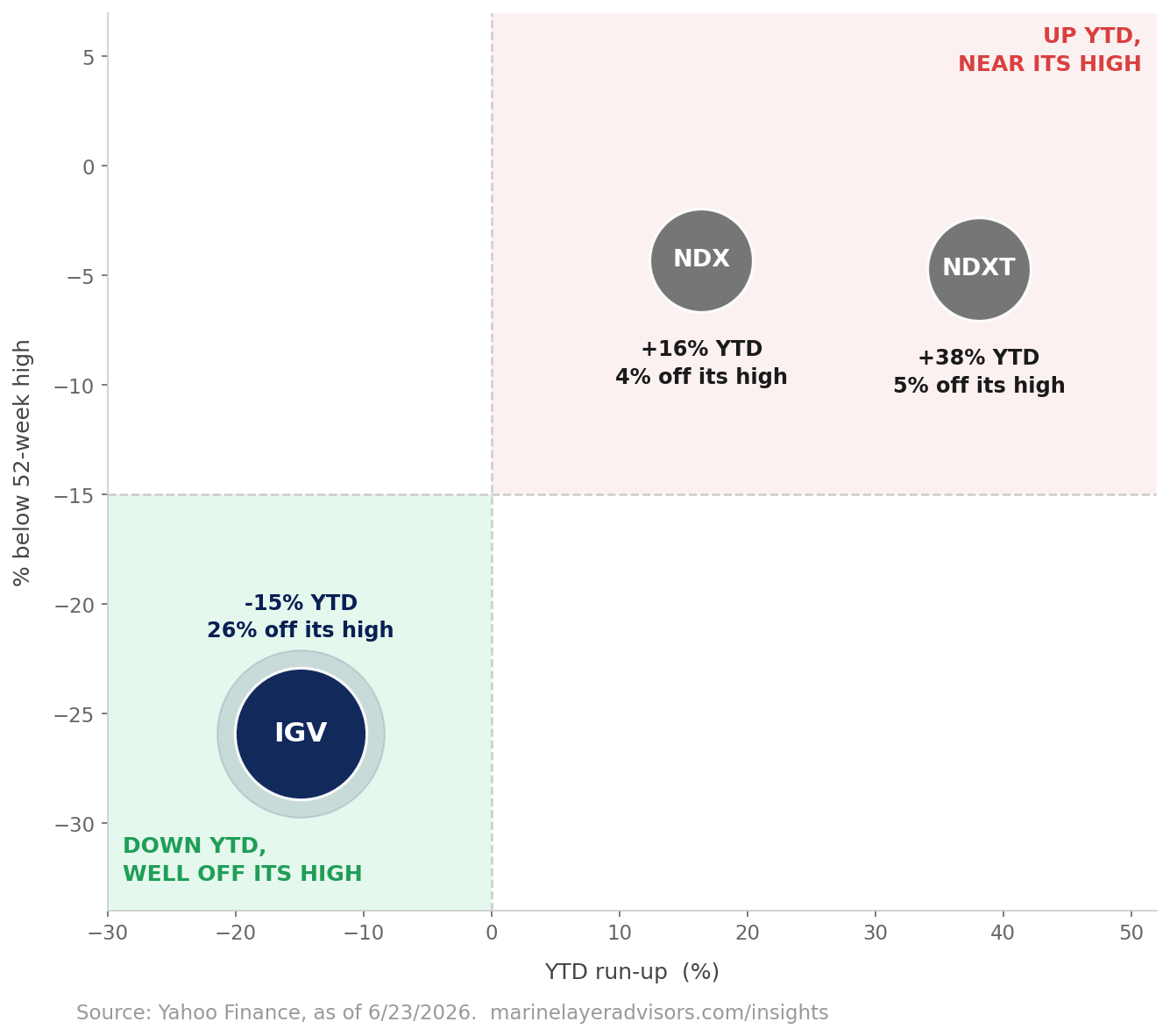
IGV income note: software is down, so the coupon is up
Software is down on the year, so the barrier sits under a name that has already fallen while its volatility raises the coupon. A better-paid income note.
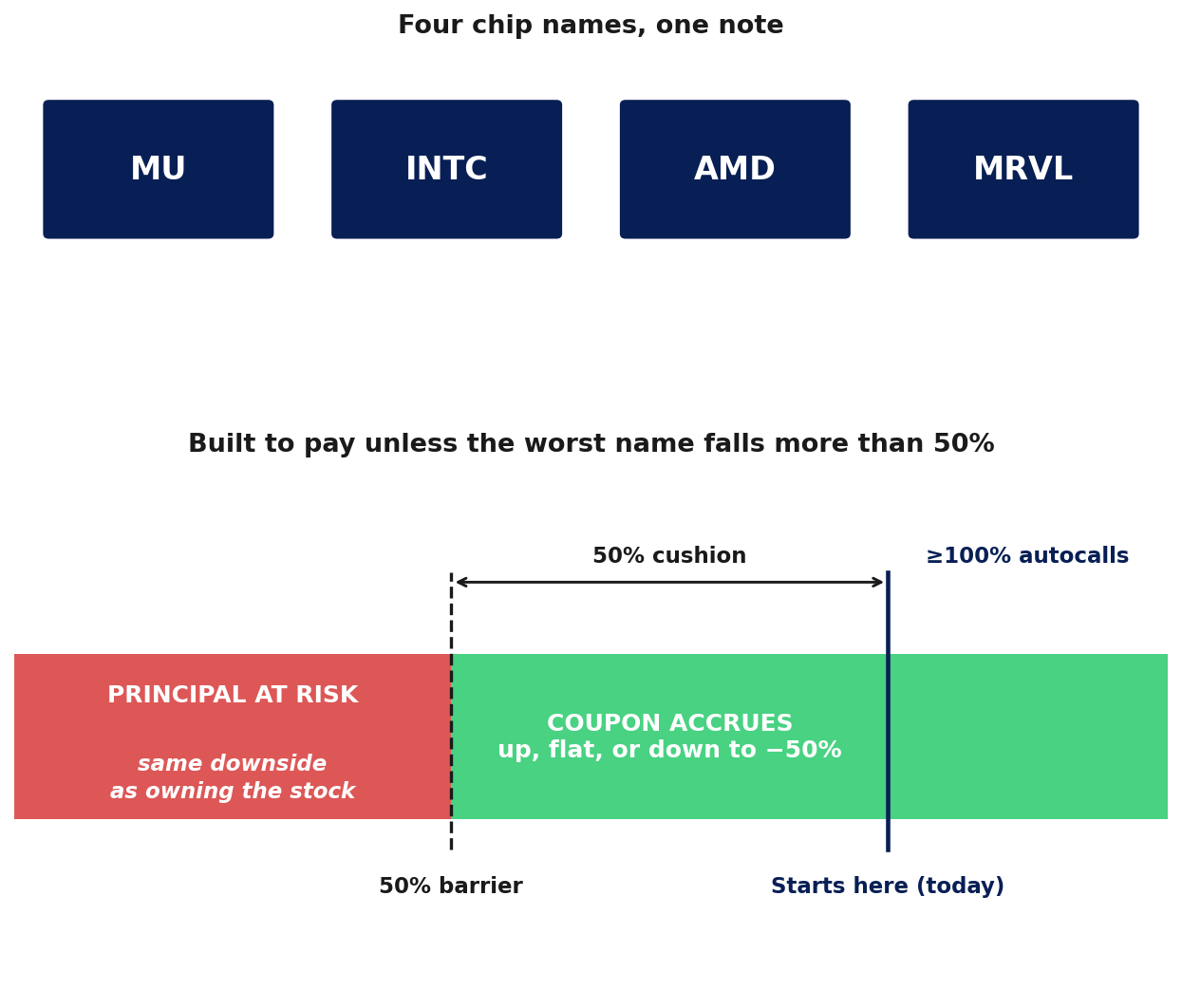
Semis income note: four AI chipmakers paying 45% a year
The four picks-and-shovels chipmakers behind every AI model pay 45% a year in one income note, with a 50% barrier covering the volatility.
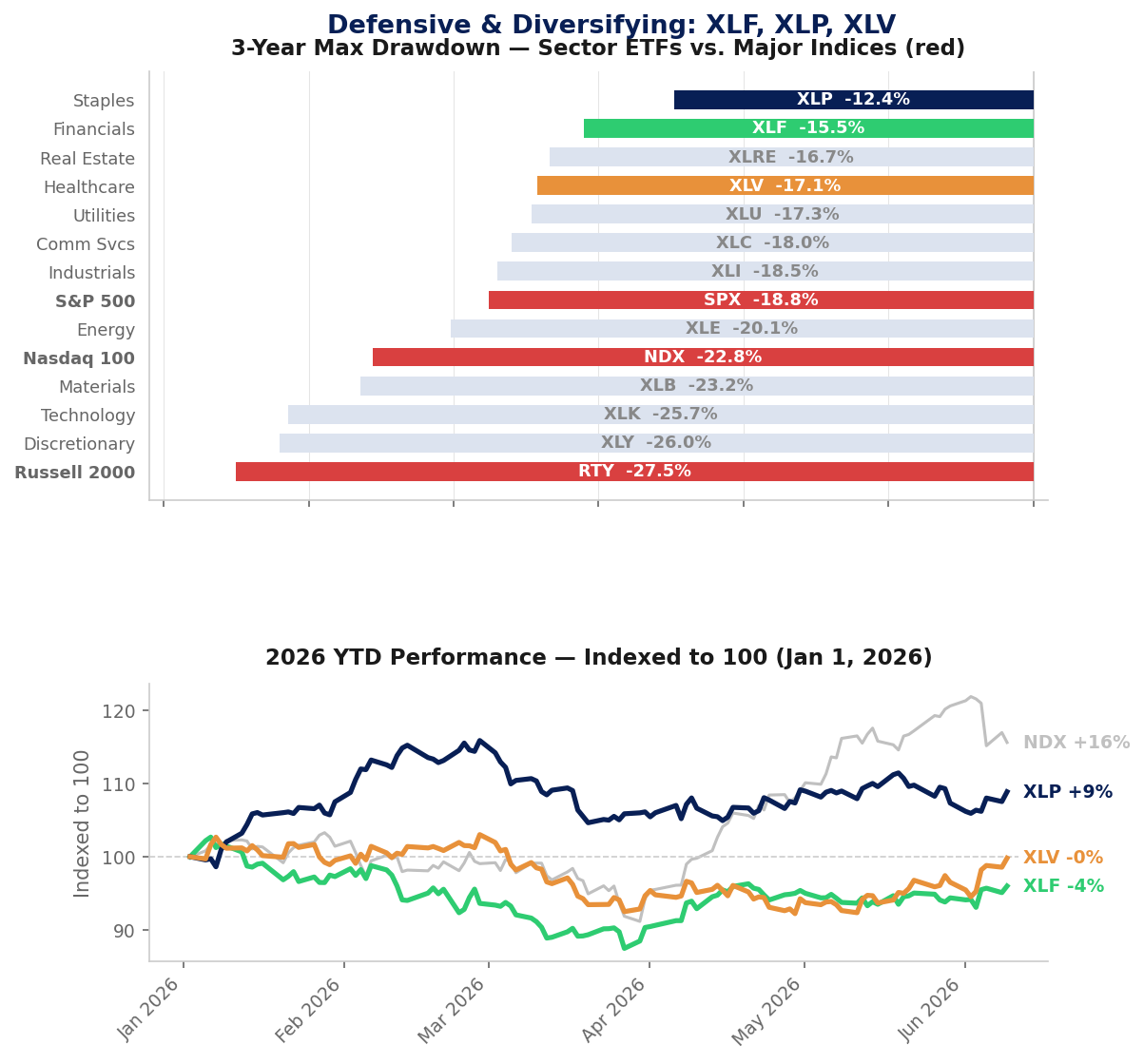
XLF/XLP/XLV income note: 9% a year without SPX, NDX or RTY
Nine percent a year from financials, staples and health care, with none of the SPX, NDX or RTY exposure every other income note already has.
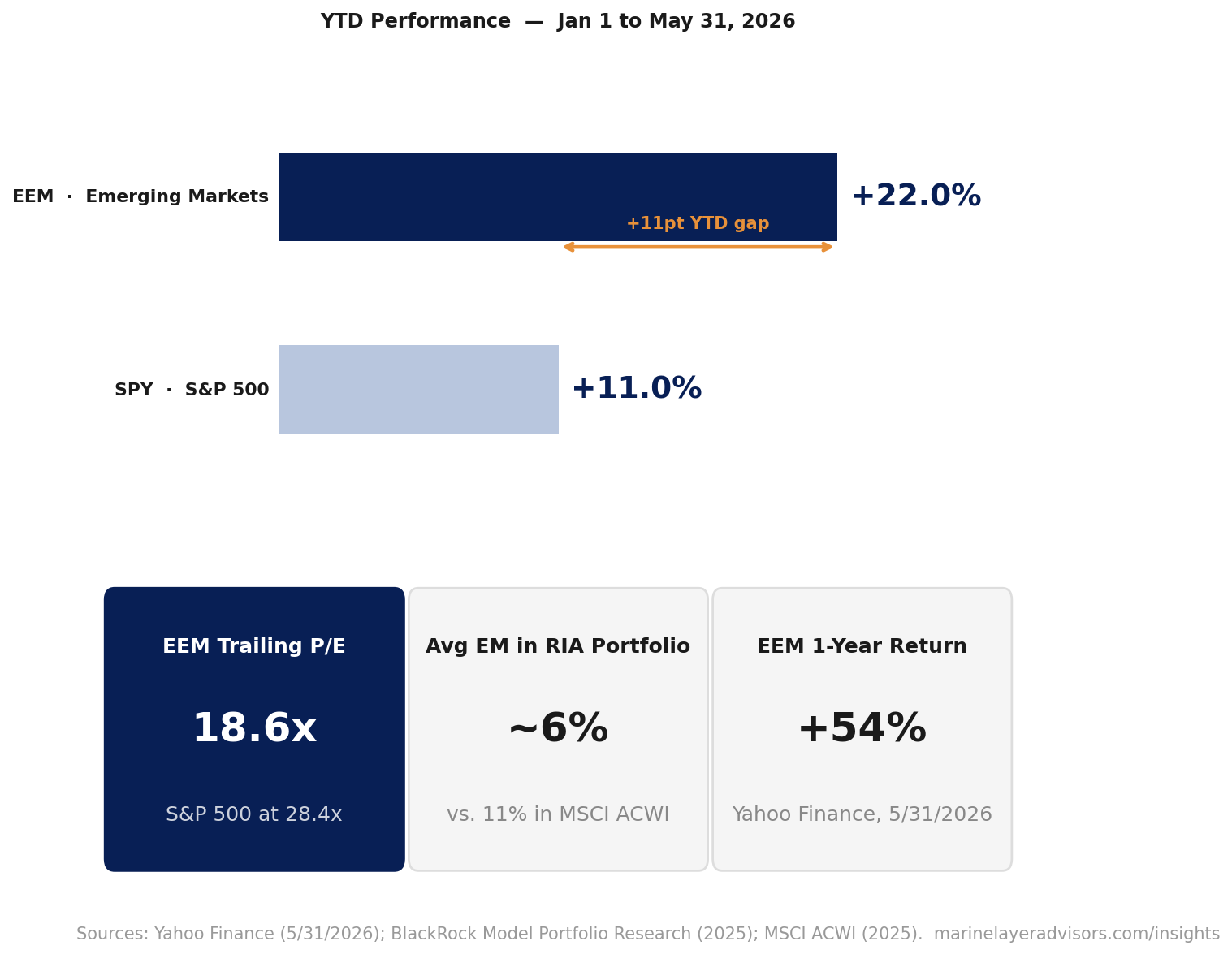
EEM growth note: emerging markets up 22%, nobody owns them
Emerging markets are up 22% this year and most client portfolios hold almost none. A participation note on EEM with a defined downside.
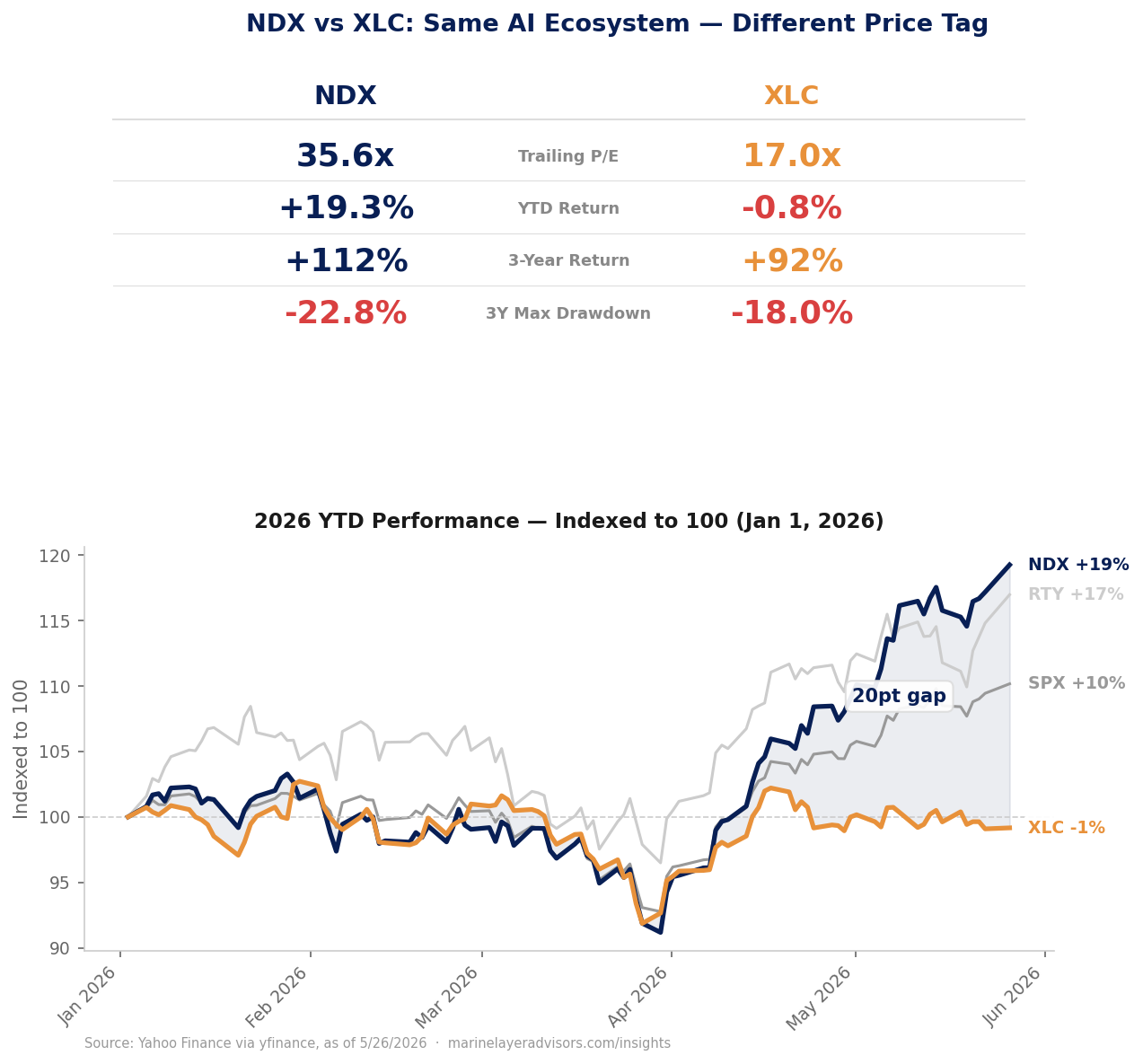
XLC income note: a new tech leg for the standard basket
The standard SPX/NDX/RTY basket was built for another market. XLC as the tech leg keeps the AI names and pays a higher coupon.
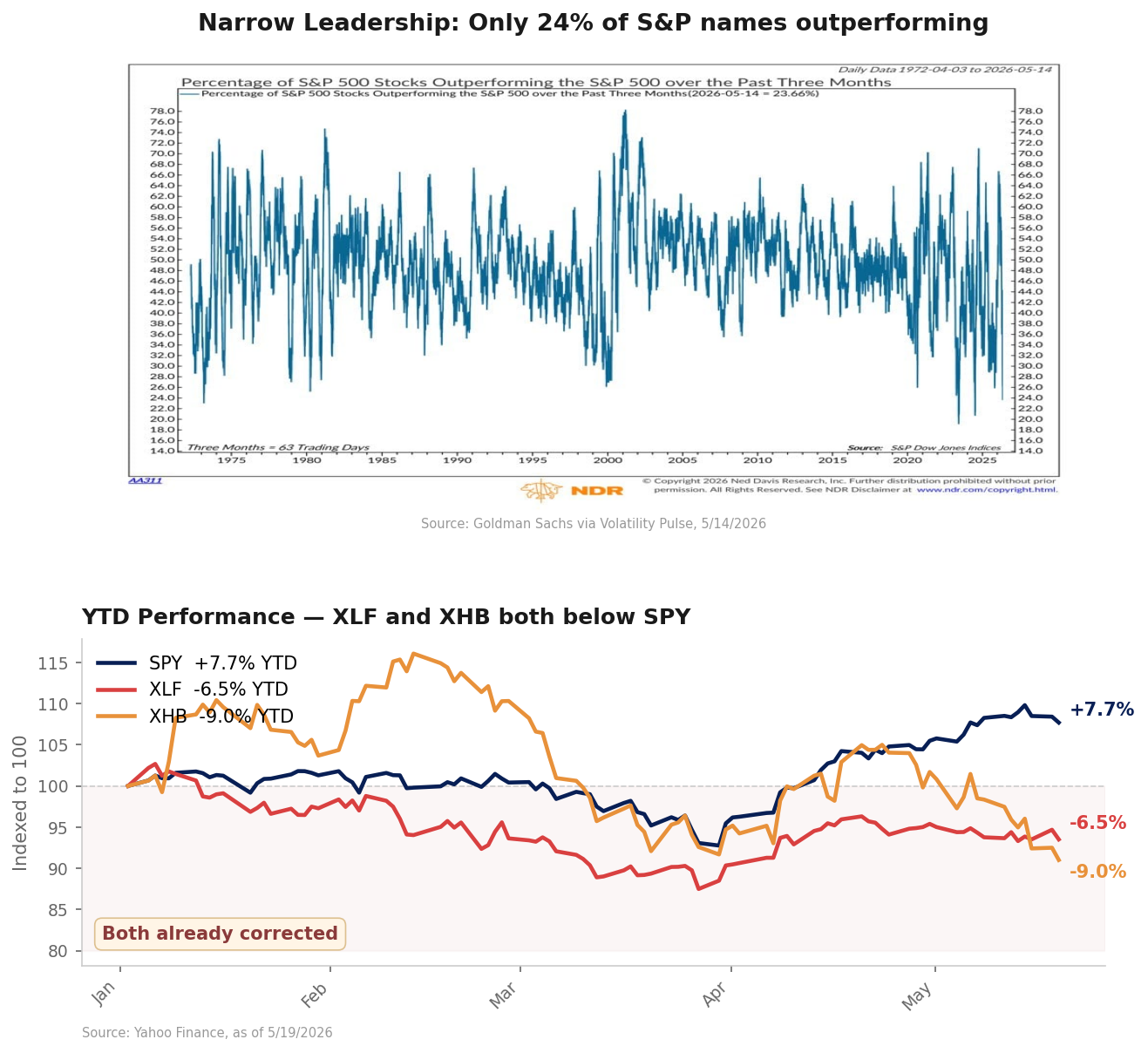
XLF/XHB income note: income on sectors that already corrected
An income note never pays you for the upside, so put it on sectors that already corrected: financials and homebuilders, with the barrier below a low.
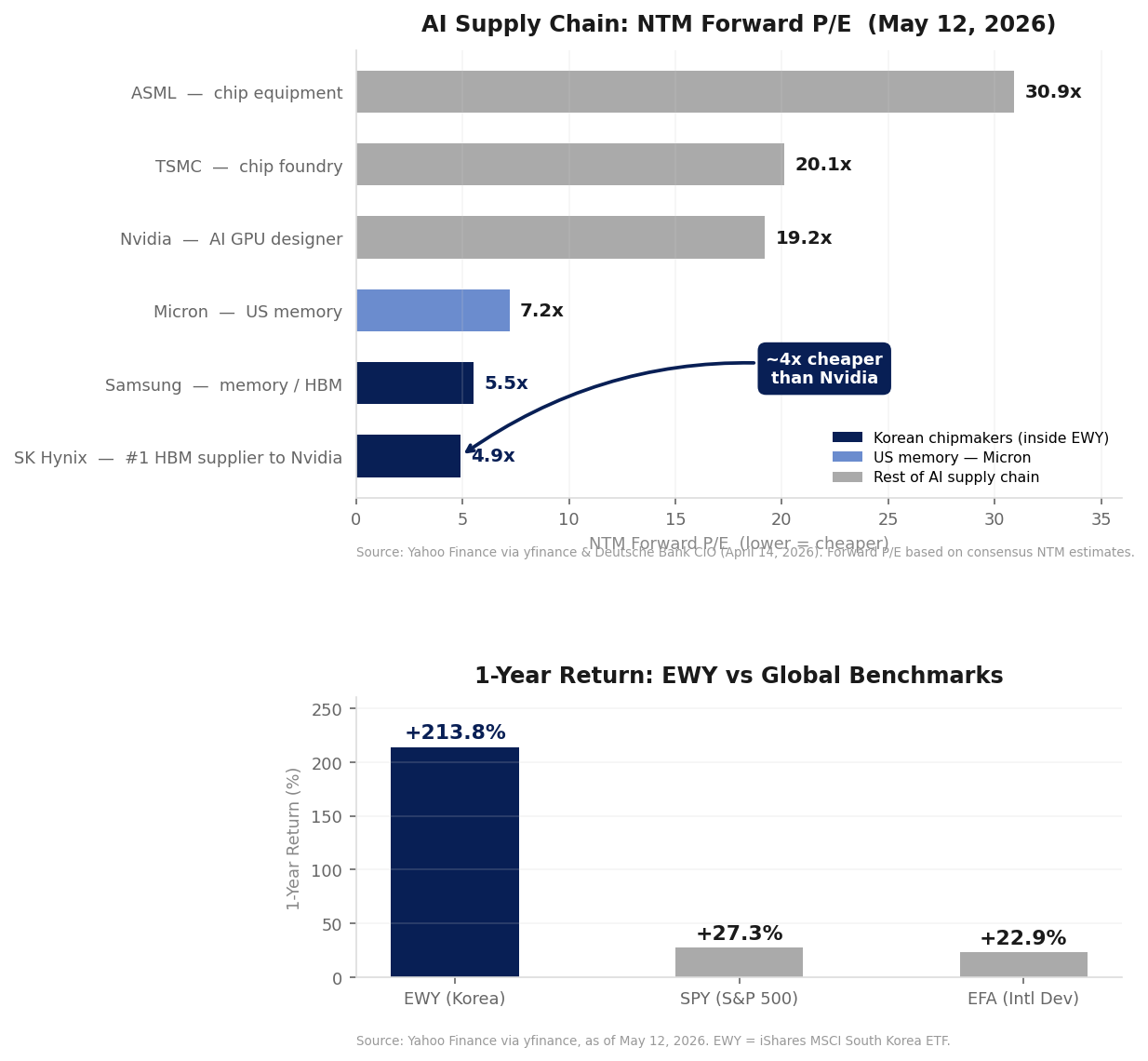
EWY growth and income: Korea tripled, still a fraction of the S&P multiple
Korea is up 200% in a year on the AI supply chain and still trades at a fraction of the S&P multiple. Growth and income on EWY.
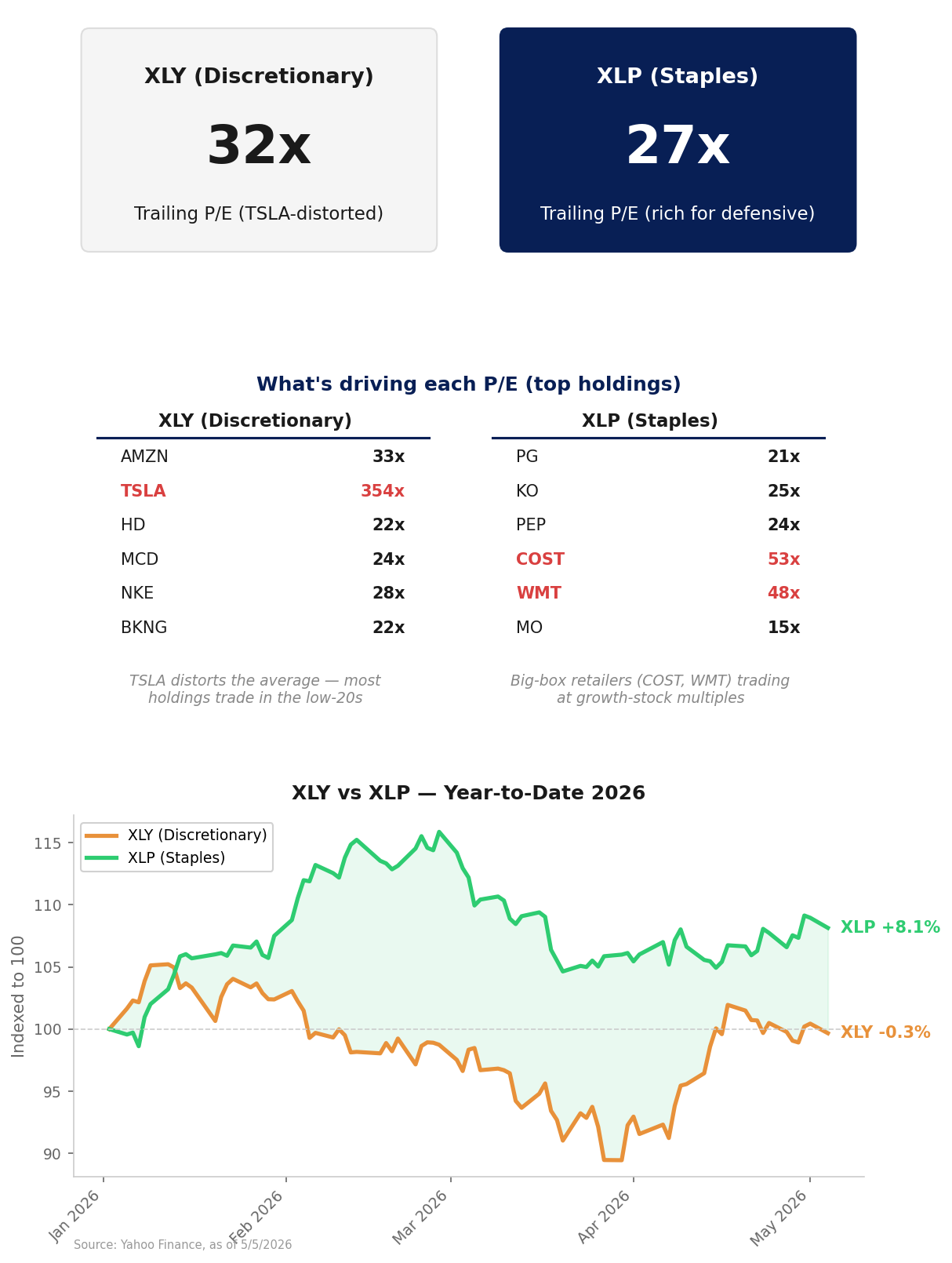
XLY growth and income: high-income consumers keep spending
High-income consumers keep spending while staples lag; discretionary is where the money is going. Growth and income on XLY.
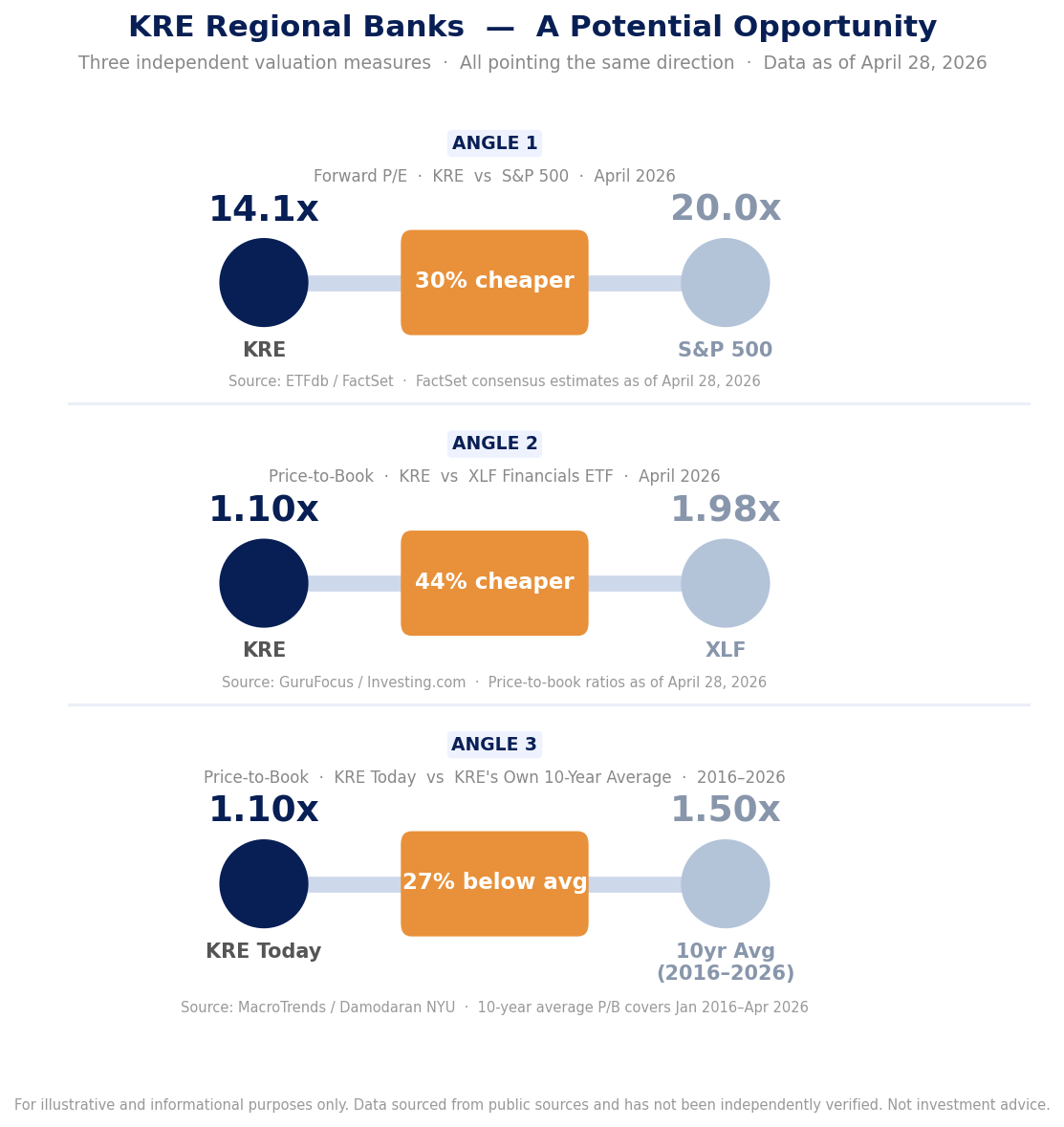
KRE growth note: regional banks screen low on three measures
Regional banks screen low on three valuation measures at once, which rarely lasts. A growth note on KRE with a barrier.
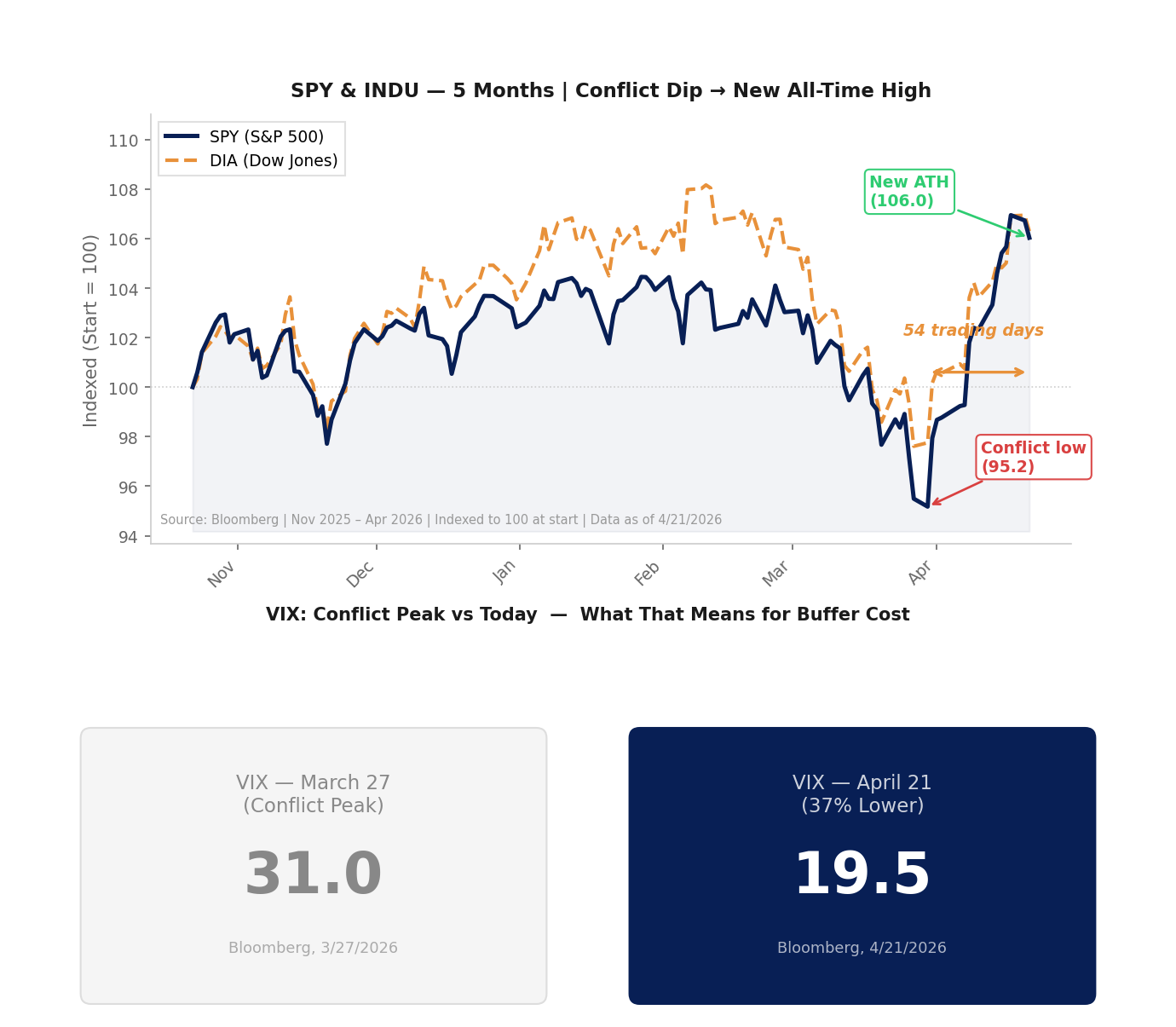
SPX/INDU buffer note: high rates and low vol price buffers well
High rates and low volatility at the same time make buffers unusually generous to build. The SPX/INDU note locks that in.
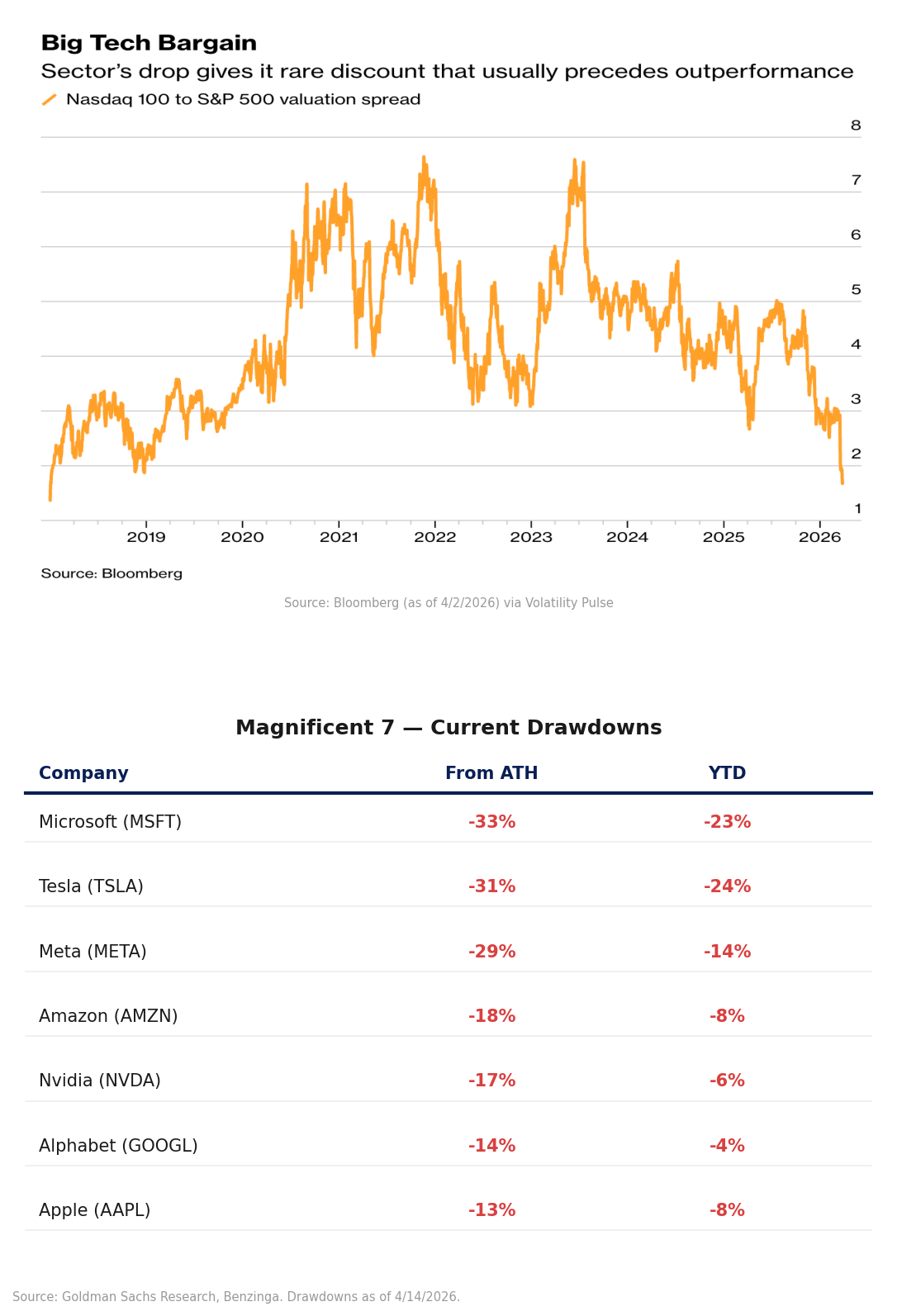
NDX growth note: big tech at a multiple not seen in years
The Nasdaq-100 trades at a relative multiple not seen in years, so the growth note buys big tech at a rare discount with a barrier underneath.
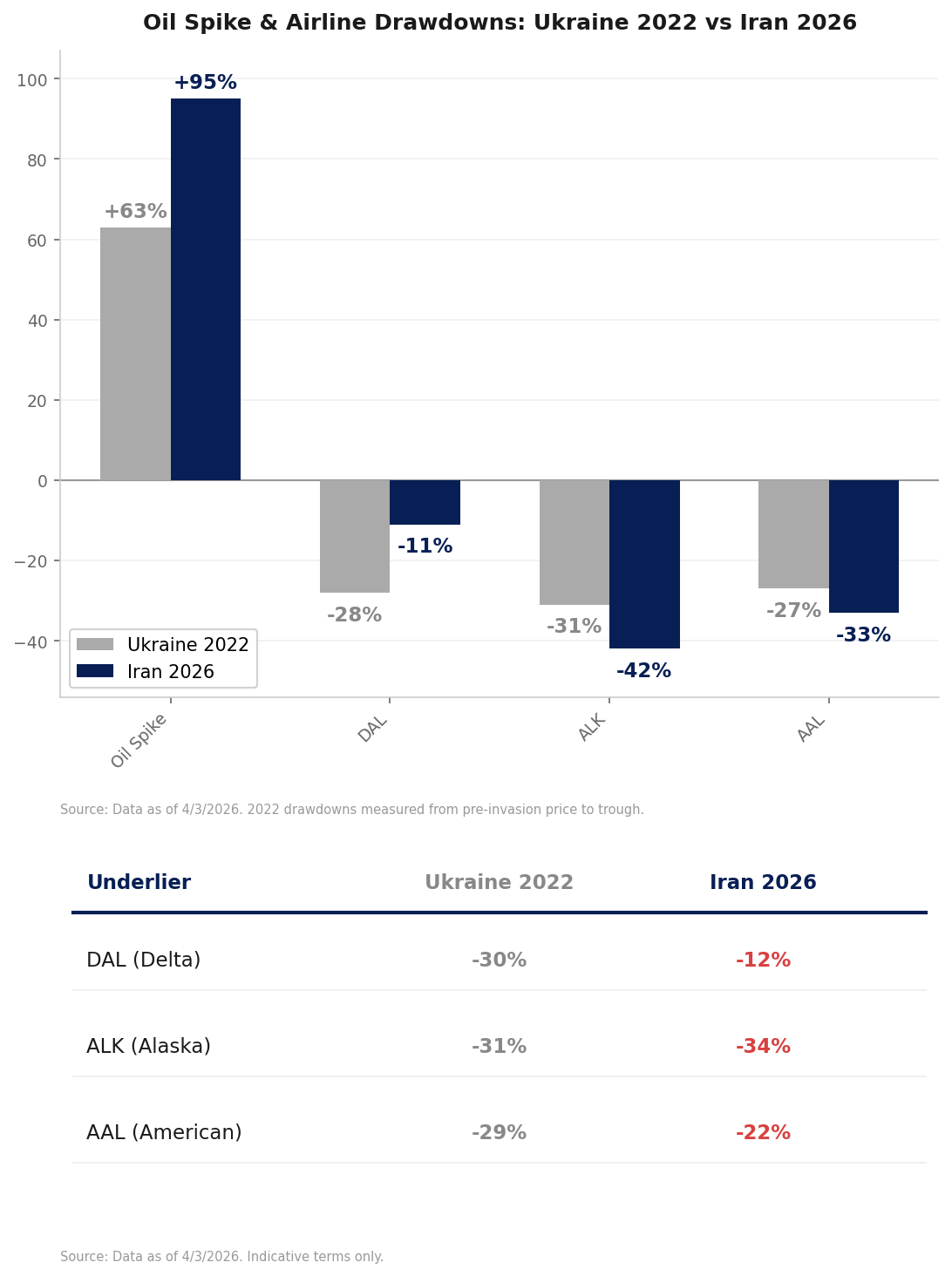
Airlines income note: what airlines did after past oil shocks
Airlines sell off on every oil shock and have recovered from every one. An income note on three carriers pays while that pattern repeats.
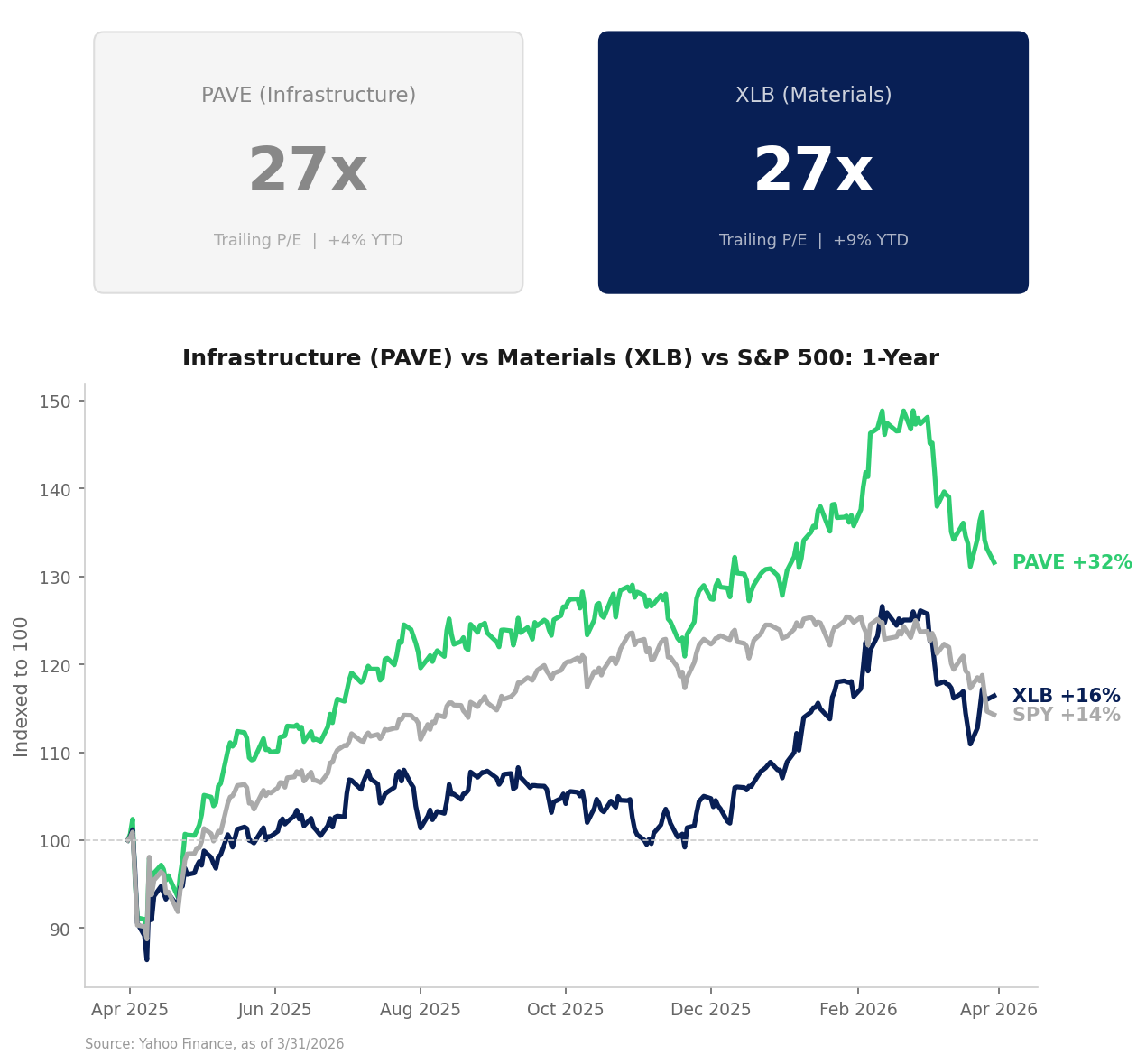
PAVE/XLB income note: infrastructure and materials, repriced by the bond market
The bond market is repricing what cannot be disrupted: infrastructure and materials. An income note on PAVE and XLB collects that premium.
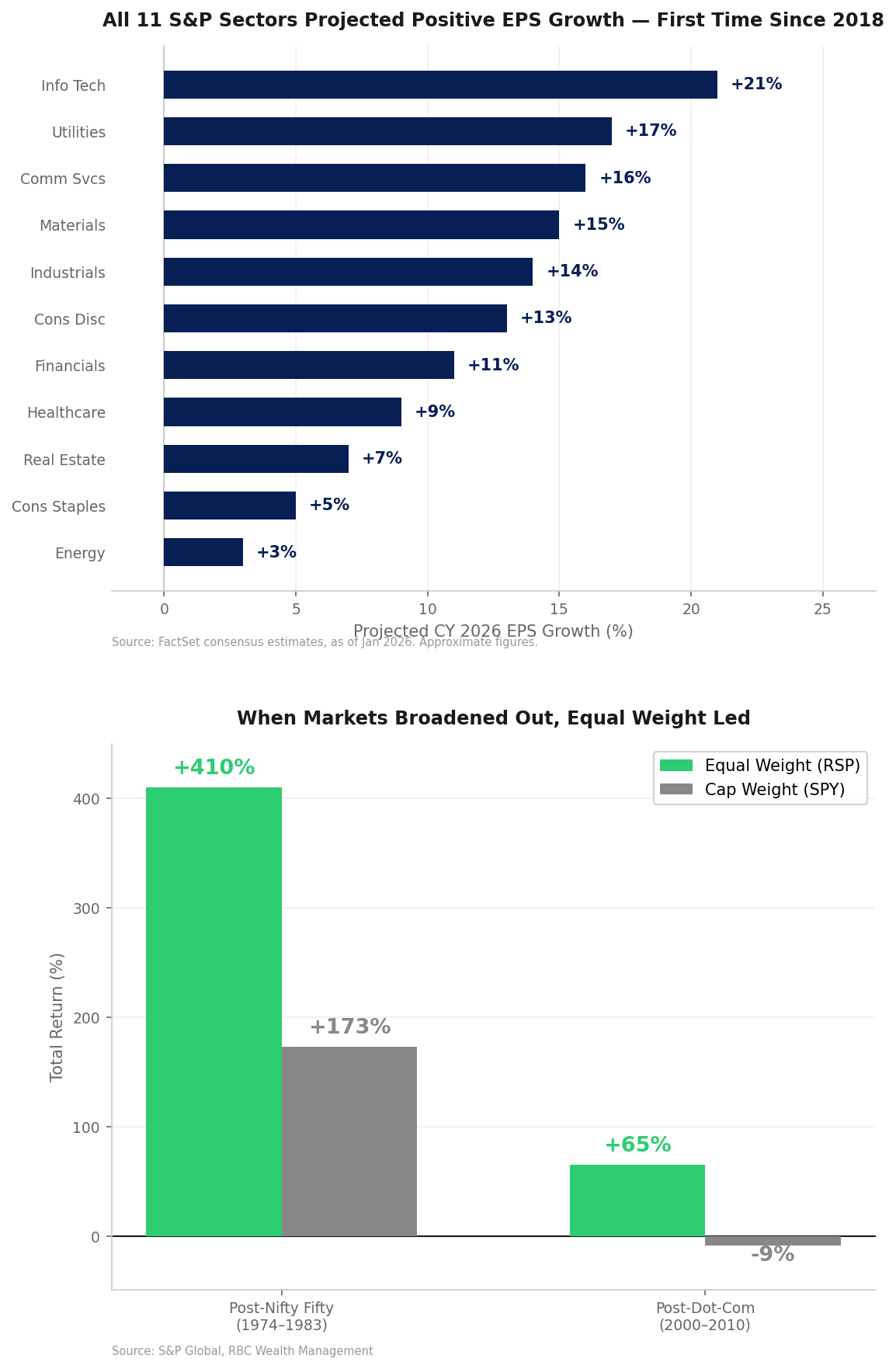
rsp equal weight
The market returns are widening - are your clients ready?
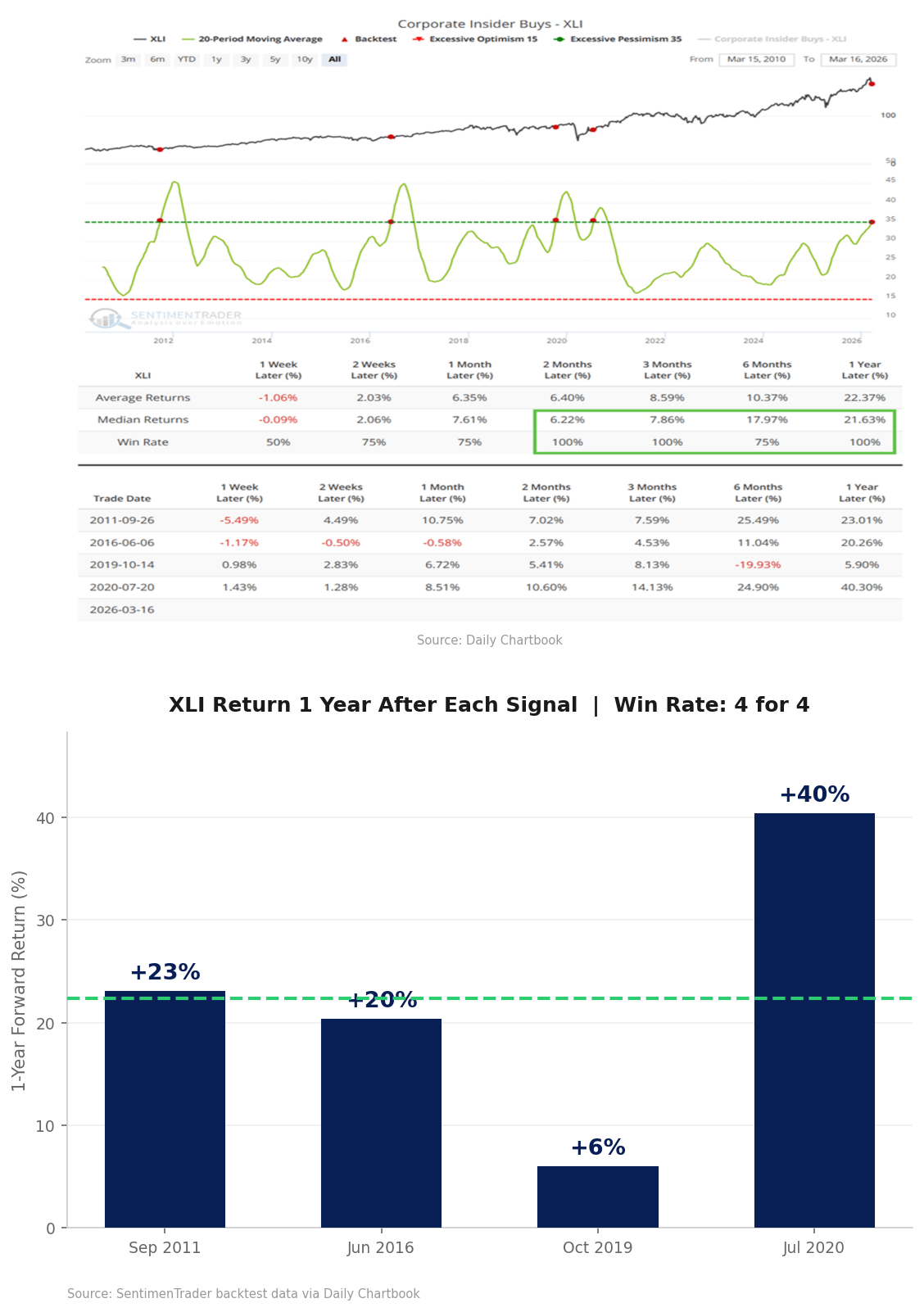
XLI growth note: industrial insiders buying at a 15-year high
Industrial insiders are buying their own stock at a 15-year high; they see something the market does not. A growth note on XLI.
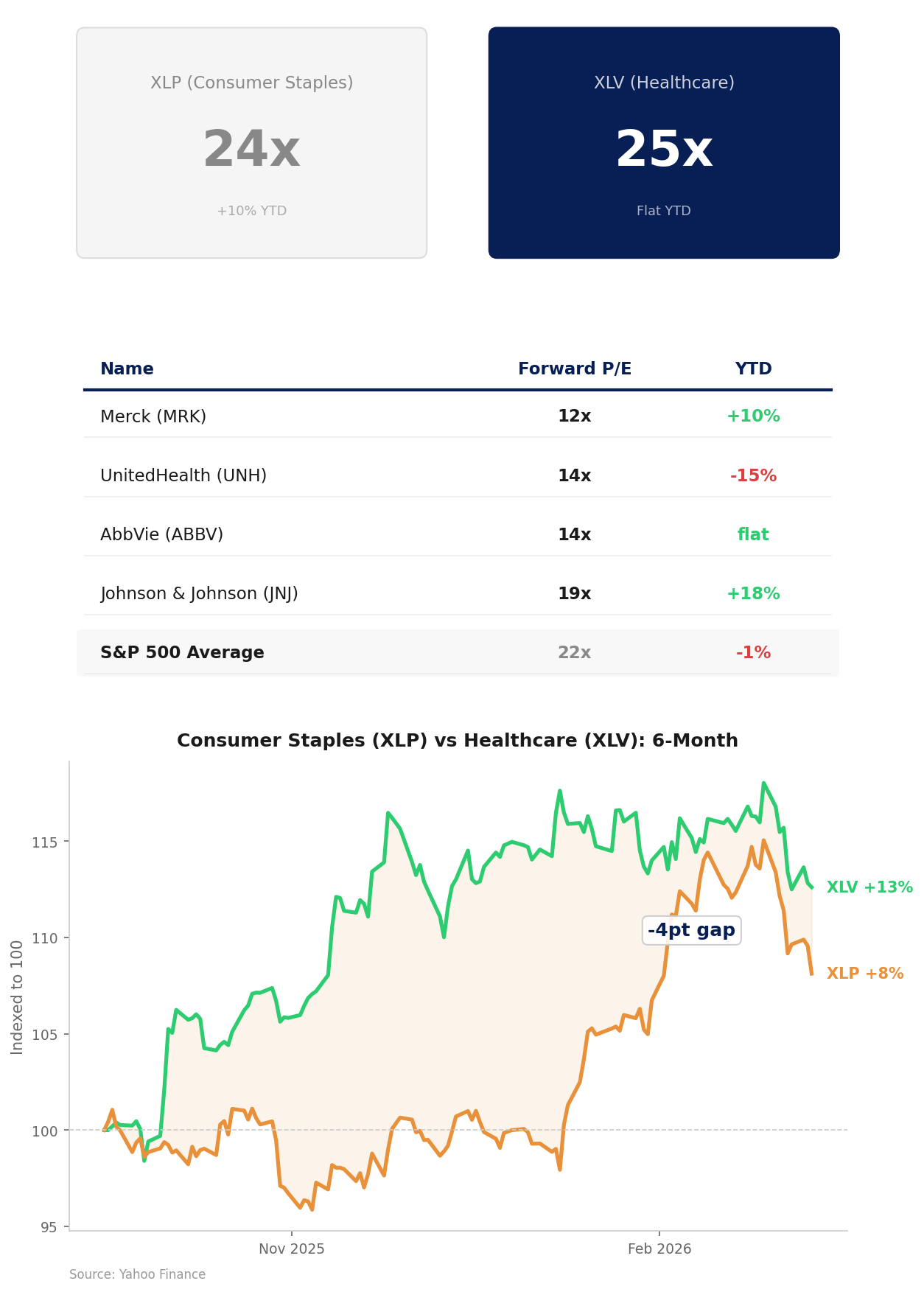
XLV buffered note: the rotation into defensives skipped health care
Investors rotated into defensives and skipped health care: staples up 10%, XLV flat. The buffered note buys the one defensive left behind.
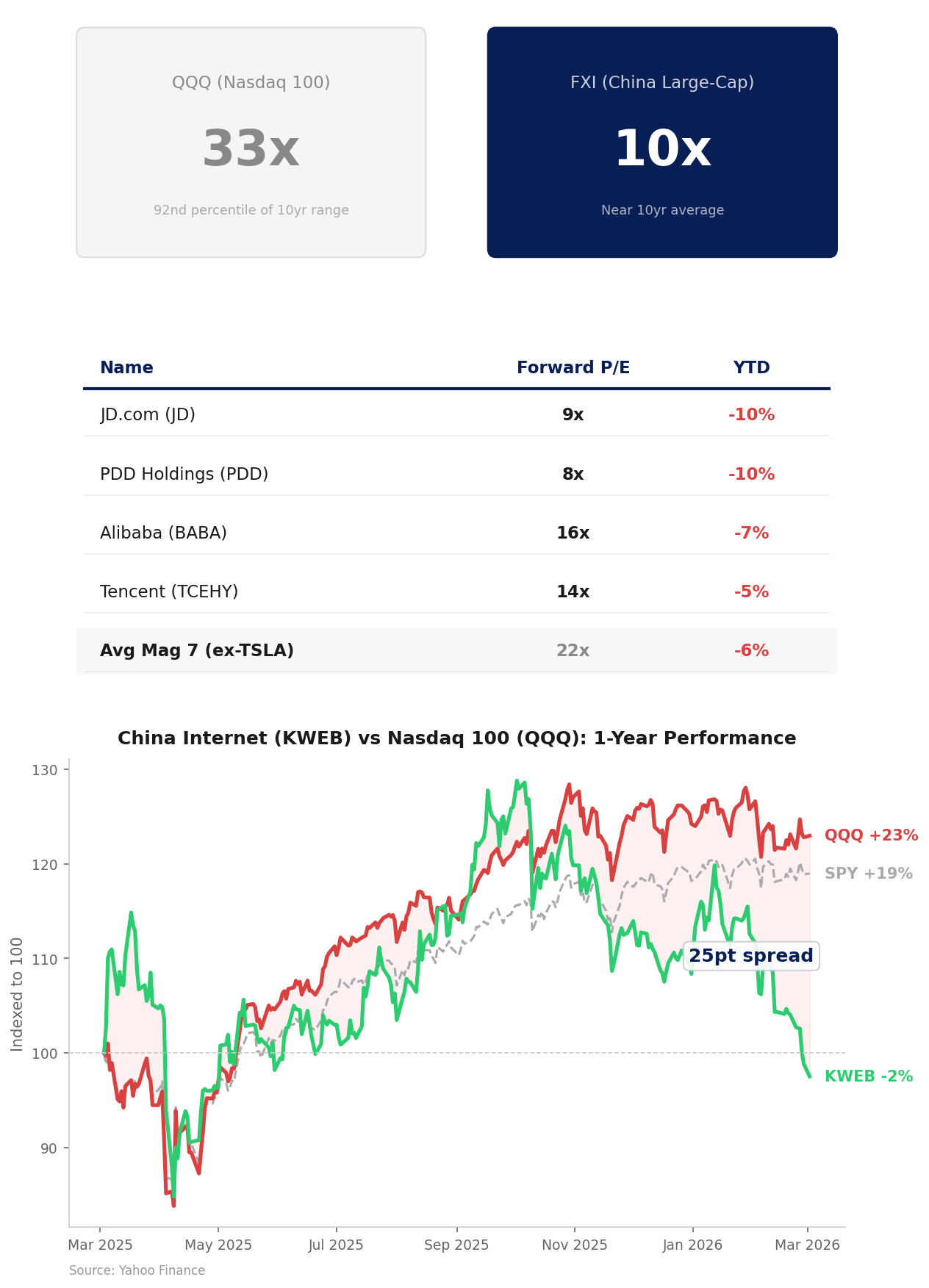
KWEB growth note: US tech at 33x, China tech at 10x
US tech at 33x, its 92nd percentile; China tech at 10x for the same kind of business. A note on KWEB buys the gap with a barrier.